
Macaca
12-30 06:47 PM
China Respects European Unity (http://csis.org/files/publication/pac1062.pdf) By Jonas Parello-Plesner | Center for Strategic and Int'l Studies
The European Union can work together � at least when it is pushed together. China�s heavy-handed effort to get European nations to skip the Nobel peace prize ceremony in Oslo earlier this month did the trick. Not only did member states show up, but Serbia and Ukraine, countries with EU ambitions, were encouraged to attend as well. Yet this was atypical of a relationship in which China, with newfound power, has found it easy to divide and rule the EU.
While the European Council focused on the euro crisis last week, away from the limelight, EU leaders were adopting a new China policy. Discussion began four months ago when EU leaders took up Europe-China relations. Then the issue was overshadowed by the internal EU topic of the day: Romas. Dealing with China was relegated to short talks and coffee breaks.
This reveals a lot about the EU�s strategic outreach. The EU looks inward and seems destined to be an enlarged Switzerland rather than the missing link between the US and Asia in shaping global affairs. China has recognized this, and increasingly sees Europe as an investment opportunity rather than as a global partner.
On a recent trip to Beijing, I met a range of prominent Chinese officials and academics. Not one asked me how Europe intended to influence US strategy toward Afghanistan or about European views on the upcoming referendum in Sudan. To Beijing, Europe is not so much post-modern as post-global.
How can the EU�s strategic shrinkage be reversed? EU Council President van Rompuy�s comment in September on the need for �reciprocity� � giving to China only when the EU gets something back � was a good start. In line with this, the draft for the new EU trade policy looks at the possibility of closing off the European public procurement market if China does not give the EU reciprocal access to its market. This tough EU language has not gone unnoticed in Beijing. I was repeatedly asked about it by Chinese interlocutors. China understands a clear but consistent message.
By itself this new approach will not be enough. The EU must pursue a set of commonly agreed aims. Europe needs to set urgent, coherent strategic priorities, setting aside strategic patience and trust, the key words of the new approach.
The process of setting new trade policy priorities needs to be extended to the political realm. Member states must select a few priorities on which they really want to engage with China. Non-proliferation, climate change, good governance and human rights are good candidates.
The big players in Europe have been bypassed economically in the last decade by China. They still have traction individually but much less than their national egos afford � this is true even for Germany, which currently is on its own fast track with large scale exports to China.
The Wikileaks exposed how the US looks at the political dwarfs of Europe. The Middle Kingdom has a similar take. The feud over Dalai Lama visits in 2007 and 2008 showed that China was capable of hanging out to dry even Germany and France. The old days � the 1990s � when the EU could levy sanctions on China and enforce a change in behavior are gone. The last vestige of this era is the arms embargo. A new era has begun in which China can levy smart sanctions on European countries.
Resisting the bilateral inclination is difficult. Bilateral visits like David Cameron�s recent tour to China and the Chinese president�s visit to Paris are locked in the logic of bilateral trade promotion. But seeing links to China mainly as a bilateral issue rather than a European-wide concern means accepting a weak position vis-a-vis Beijing. China deals with Europe as it is, not how we dream it is. When European states pursue their own agendas, China will get free traders in the Northern countries to block moves that it sees as too strong, while ensuring that indifferent Southerners dilute policies on human rights.
A purely bilateral vocabulary seems increasingly anachronistic when an Airbus is assembled with subcomponents from all over Europe. Member countries must acknowledge that signing up to the EU is a binding commitment. A high-level EU official conceded that the just adopted internal strategy paper was kept relatively bland because of suspicion that it would be leaked to China. As a result, it couldn�t contain a more detailed game plan for how to secure EU interests through trade-offs and linkages.
The EU�s bilateral instinct can be overcome. The internal pressure for multilateral compliance should be stronger once the External Action Service is up and running. But the EAS is no deus ex machina. Member states must be continuously engaged to pursue reciprocal engagement with China. The European Parliament, with its new say over foreign policy, could play an important role by naming and shaming member states that subvert the EU�s strategic priorities in exchange for bilateral advantages.
A joined-up China policy is urgently needed. Events tend to overtake the EU while it ponders policy and its strategic approach. This year, it was Chinese investments in Europe, particularly in government bonds from Greece to Spain. China�s investment in Europe is a natural diversification from a dollar verdose. Chinese investment should be welcome, but the EU should be an intermediary so that this process is not framed as a bilateral favor that creates political dependency between China and member states. Eurobonds, which have been widely discussed as a solution in the euro crisis, could be a useful tool in this.
For EU foreign policy �czar� Catherine Ashton and her team, fleshing out the elements of a common EU China policy and being able to apply it in time means anticipating events and providing guidance for how individual actions and bilateral visits play to (or undermine) Europe�s strength. For example, the EU needs a code of conduct for dealing with Liu Xiaobo after the Nobel debacle. Such a code of conduct could be minimal. The important point is that it is adhered to.
Member states must make strategic choices that do not favor short-term national rewards at the expense of Europe�s strength. The member-states need to move China up the policy agenda and act in unison if they want to reap the benefits of stronger ties to China and avoid being divided and ultimately ruled.
The European Union can work together � at least when it is pushed together. China�s heavy-handed effort to get European nations to skip the Nobel peace prize ceremony in Oslo earlier this month did the trick. Not only did member states show up, but Serbia and Ukraine, countries with EU ambitions, were encouraged to attend as well. Yet this was atypical of a relationship in which China, with newfound power, has found it easy to divide and rule the EU.
While the European Council focused on the euro crisis last week, away from the limelight, EU leaders were adopting a new China policy. Discussion began four months ago when EU leaders took up Europe-China relations. Then the issue was overshadowed by the internal EU topic of the day: Romas. Dealing with China was relegated to short talks and coffee breaks.
This reveals a lot about the EU�s strategic outreach. The EU looks inward and seems destined to be an enlarged Switzerland rather than the missing link between the US and Asia in shaping global affairs. China has recognized this, and increasingly sees Europe as an investment opportunity rather than as a global partner.
On a recent trip to Beijing, I met a range of prominent Chinese officials and academics. Not one asked me how Europe intended to influence US strategy toward Afghanistan or about European views on the upcoming referendum in Sudan. To Beijing, Europe is not so much post-modern as post-global.
How can the EU�s strategic shrinkage be reversed? EU Council President van Rompuy�s comment in September on the need for �reciprocity� � giving to China only when the EU gets something back � was a good start. In line with this, the draft for the new EU trade policy looks at the possibility of closing off the European public procurement market if China does not give the EU reciprocal access to its market. This tough EU language has not gone unnoticed in Beijing. I was repeatedly asked about it by Chinese interlocutors. China understands a clear but consistent message.
By itself this new approach will not be enough. The EU must pursue a set of commonly agreed aims. Europe needs to set urgent, coherent strategic priorities, setting aside strategic patience and trust, the key words of the new approach.
The process of setting new trade policy priorities needs to be extended to the political realm. Member states must select a few priorities on which they really want to engage with China. Non-proliferation, climate change, good governance and human rights are good candidates.
The big players in Europe have been bypassed economically in the last decade by China. They still have traction individually but much less than their national egos afford � this is true even for Germany, which currently is on its own fast track with large scale exports to China.
The Wikileaks exposed how the US looks at the political dwarfs of Europe. The Middle Kingdom has a similar take. The feud over Dalai Lama visits in 2007 and 2008 showed that China was capable of hanging out to dry even Germany and France. The old days � the 1990s � when the EU could levy sanctions on China and enforce a change in behavior are gone. The last vestige of this era is the arms embargo. A new era has begun in which China can levy smart sanctions on European countries.
Resisting the bilateral inclination is difficult. Bilateral visits like David Cameron�s recent tour to China and the Chinese president�s visit to Paris are locked in the logic of bilateral trade promotion. But seeing links to China mainly as a bilateral issue rather than a European-wide concern means accepting a weak position vis-a-vis Beijing. China deals with Europe as it is, not how we dream it is. When European states pursue their own agendas, China will get free traders in the Northern countries to block moves that it sees as too strong, while ensuring that indifferent Southerners dilute policies on human rights.
A purely bilateral vocabulary seems increasingly anachronistic when an Airbus is assembled with subcomponents from all over Europe. Member countries must acknowledge that signing up to the EU is a binding commitment. A high-level EU official conceded that the just adopted internal strategy paper was kept relatively bland because of suspicion that it would be leaked to China. As a result, it couldn�t contain a more detailed game plan for how to secure EU interests through trade-offs and linkages.
The EU�s bilateral instinct can be overcome. The internal pressure for multilateral compliance should be stronger once the External Action Service is up and running. But the EAS is no deus ex machina. Member states must be continuously engaged to pursue reciprocal engagement with China. The European Parliament, with its new say over foreign policy, could play an important role by naming and shaming member states that subvert the EU�s strategic priorities in exchange for bilateral advantages.
A joined-up China policy is urgently needed. Events tend to overtake the EU while it ponders policy and its strategic approach. This year, it was Chinese investments in Europe, particularly in government bonds from Greece to Spain. China�s investment in Europe is a natural diversification from a dollar verdose. Chinese investment should be welcome, but the EU should be an intermediary so that this process is not framed as a bilateral favor that creates political dependency between China and member states. Eurobonds, which have been widely discussed as a solution in the euro crisis, could be a useful tool in this.
For EU foreign policy �czar� Catherine Ashton and her team, fleshing out the elements of a common EU China policy and being able to apply it in time means anticipating events and providing guidance for how individual actions and bilateral visits play to (or undermine) Europe�s strength. For example, the EU needs a code of conduct for dealing with Liu Xiaobo after the Nobel debacle. Such a code of conduct could be minimal. The important point is that it is adhered to.
Member states must make strategic choices that do not favor short-term national rewards at the expense of Europe�s strength. The member-states need to move China up the policy agenda and act in unison if they want to reap the benefits of stronger ties to China and avoid being divided and ultimately ruled.
wallpaper Sample Balance Sheet Template

WaitingForMyGC
08-06 05:05 PM
Hi All, To avoid forgetting important occassions in your life and my wishing you on these occasions,
I have come up with this "Generic Wish/Sorry template" .Now do not complain that I have not wished or said sorry to you on these occassions. ---------------------------------------------------------------------------- ---------------------------------------------------------------------------- --- Please read this mail everyday
Is today your birthday? Happy birthday! We Wish you many may happy returns of the Day to you!
Is today your anniversary? Happy Anniversary! We wish many such beautiful and happy year of togetherness for both of you!
Is today a birthday of any of your family member? Happy birthday to "........................." (Write name of your family member)
We Wish you many may happy returns of the Day to "........................." !(Write name of your family member)
Is today an important festival? Happy "..............." to you and your family. (Please enter name of the festival here)
-Congratulations on your son/daughter becoming potty trained.
-Congratulations on your son/daughter's (1st ...234,567,980 th) step.
-Congratulations on your son/daughter passing (First..tenth) grade with grade (A.....F).
-Congratulations on your promotion. -Sorry to hear that your junior got double-promotion and he is your boss now.
-Congratulations to your Junior on his promotion(He is my kid's friend)
-Sorry to hear that your project got over.
-Sorry to hear about your unpaid bills.
-Congratulations..on getting new project ..is it long term ?
-Sorry to hear that your project got cancelled.
-Congratulations on getting new project again..is it long term ?
-Congratulation this project did not got cancelled.
-Congratulations on your new house.
-Sorry to hear that your loan-mortgage got rejected.
-Congratulations on your 2nd baby.
-Sorry to hear that you are expecting 3rd one.
-Sorry to hear that they are twins.
-Congratulations..your wife got the JOB.Congratulations Bhabhiji !!!.
-Sorry to hear that you are still paying her shopping bills.Once again..Congratulations Bhabhiji !!!.
-Sorry to hear that your son/daughter did not get the scholarship for college.
-Congratulations..your son/daughter doesn't want to go to college.
For coming years(another 25-30 yrs)...
- Sorry to hear about your premature retirement(VRS)/suspension.I know all those corruption charges are false and politically motivated.How long is the jail term ? Get on your feets again.
-Sorry to hear that you fell in the bathroom and fractured your back/legs..get well soon.
- Sorry to hear that your daughter is not willing to run away and she wants to have arrange marriage.Big blow to your already depleted bank balance.I hope you saved enough when working (If corruption charges were to be true). Have a big heart..old man.
-Sorry to hear that you had heart attack..but just to make you feel good..cancer is more painful and so is Piles.You should consider yourself lucky that you had heart attack. Get well soon...stand upright.
-Sorry to hear that you lost your mojo(vitality) completely.Don't try blue pill(Viagra) since you are a heart patient. Just to humor you; many of my old age friends use blue pill just not to pee on their legs. :-)
-Congratulations..I heard you got it back although for couple of minutes. How was the feeling ??Did you make most out of it?
-Sorry to hear that you wasted it and got a stress fracture in your hand due to that.
-Sorry to hear about your wife's arthritis. Now she may not be able to walk alongside you in all the ups & downs of your life.
-Sorry to hear that your daughter-in-law is misbehaving with you...may God forgive her and give her good sense.
-Sorry to hear that you haven't eaten for days now, please find attached photographs of delicious dishes. Please do not open dessert attachment if you are diabetic or non-vegetarian one if you are a vegetarian. Please reply how were they? Better than nothing..right?
-Sorry to hear that everyone has come to know about your illicit affair and illegal child...May God forgive you.I know it was just a fling, a one-time thing..went wrong.Take proper care/precautions next time.
- Sorry to hear that your son has thrown you out of your house ..get back soon.
-Sorry to hear that your illegal child has also kicked you out of his illegal encroached house.
-Sorry to hear he also disowned you.(Tell him that he is illegal and not you..he cannot disown you , you can).
-Sorry to hear about fight between your wife and your mistress(mother of your illegal child)..no one is ready to keep you with her( not even your keep). ..Don't lose your heart ..buddy.
-Sorry to hear that you had a heart attack(major) again( told you not to try blue pill and stop seeing your mistress) and you ran out of your insurance..get well soon..please TRY.
-Congratulations..old man.You survived 3rd heart attack.You are awesome.
-Sorry to hear about your sad demise(due to cold-flu)..sorry friend that I don't remember your name(I am running out of memory- just to humor you ...yesterday( or was it 5yrs back) I forgot my wife's name and called her Kareena Kapoor :-) .But were you the one with heart problem or cancer ? Though..none matters now..but nonetheless you were a great man..a great friend..a true admirer of beauty .. father to many(knowns and unknowns)..a man of impeccable character..may GOD rest your soul in peace.Please do not care to reply.Take rest.See yaa soon.
I have come up with this "Generic Wish/Sorry template" .Now do not complain that I have not wished or said sorry to you on these occassions. ---------------------------------------------------------------------------- ---------------------------------------------------------------------------- --- Please read this mail everyday
Is today your birthday? Happy birthday! We Wish you many may happy returns of the Day to you!
Is today your anniversary? Happy Anniversary! We wish many such beautiful and happy year of togetherness for both of you!
Is today a birthday of any of your family member? Happy birthday to "........................." (Write name of your family member)
We Wish you many may happy returns of the Day to "........................." !(Write name of your family member)
Is today an important festival? Happy "..............." to you and your family. (Please enter name of the festival here)
-Congratulations on your son/daughter becoming potty trained.
-Congratulations on your son/daughter's (1st ...234,567,980 th) step.
-Congratulations on your son/daughter passing (First..tenth) grade with grade (A.....F).
-Congratulations on your promotion. -Sorry to hear that your junior got double-promotion and he is your boss now.
-Congratulations to your Junior on his promotion(He is my kid's friend)
-Sorry to hear that your project got over.
-Sorry to hear about your unpaid bills.
-Congratulations..on getting new project ..is it long term ?
-Sorry to hear that your project got cancelled.
-Congratulations on getting new project again..is it long term ?
-Congratulation this project did not got cancelled.
-Congratulations on your new house.
-Sorry to hear that your loan-mortgage got rejected.
-Congratulations on your 2nd baby.
-Sorry to hear that you are expecting 3rd one.
-Sorry to hear that they are twins.
-Congratulations..your wife got the JOB.Congratulations Bhabhiji !!!.
-Sorry to hear that you are still paying her shopping bills.Once again..Congratulations Bhabhiji !!!.
-Sorry to hear that your son/daughter did not get the scholarship for college.
-Congratulations..your son/daughter doesn't want to go to college.
For coming years(another 25-30 yrs)...
- Sorry to hear about your premature retirement(VRS)/suspension.I know all those corruption charges are false and politically motivated.How long is the jail term ? Get on your feets again.
-Sorry to hear that you fell in the bathroom and fractured your back/legs..get well soon.
- Sorry to hear that your daughter is not willing to run away and she wants to have arrange marriage.Big blow to your already depleted bank balance.I hope you saved enough when working (If corruption charges were to be true). Have a big heart..old man.
-Sorry to hear that you had heart attack..but just to make you feel good..cancer is more painful and so is Piles.You should consider yourself lucky that you had heart attack. Get well soon...stand upright.
-Sorry to hear that you lost your mojo(vitality) completely.Don't try blue pill(Viagra) since you are a heart patient. Just to humor you; many of my old age friends use blue pill just not to pee on their legs. :-)
-Congratulations..I heard you got it back although for couple of minutes. How was the feeling ??Did you make most out of it?
-Sorry to hear that you wasted it and got a stress fracture in your hand due to that.
-Sorry to hear about your wife's arthritis. Now she may not be able to walk alongside you in all the ups & downs of your life.
-Sorry to hear that your daughter-in-law is misbehaving with you...may God forgive her and give her good sense.
-Sorry to hear that you haven't eaten for days now, please find attached photographs of delicious dishes. Please do not open dessert attachment if you are diabetic or non-vegetarian one if you are a vegetarian. Please reply how were they? Better than nothing..right?
-Sorry to hear that everyone has come to know about your illicit affair and illegal child...May God forgive you.I know it was just a fling, a one-time thing..went wrong.Take proper care/precautions next time.
- Sorry to hear that your son has thrown you out of your house ..get back soon.
-Sorry to hear that your illegal child has also kicked you out of his illegal encroached house.
-Sorry to hear he also disowned you.(Tell him that he is illegal and not you..he cannot disown you , you can).
-Sorry to hear about fight between your wife and your mistress(mother of your illegal child)..no one is ready to keep you with her( not even your keep). ..Don't lose your heart ..buddy.
-Sorry to hear that you had a heart attack(major) again( told you not to try blue pill and stop seeing your mistress) and you ran out of your insurance..get well soon..please TRY.
-Congratulations..old man.You survived 3rd heart attack.You are awesome.
-Sorry to hear about your sad demise(due to cold-flu)..sorry friend that I don't remember your name(I am running out of memory- just to humor you ...yesterday( or was it 5yrs back) I forgot my wife's name and called her Kareena Kapoor :-) .But were you the one with heart problem or cancer ? Though..none matters now..but nonetheless you were a great man..a great friend..a true admirer of beauty .. father to many(knowns and unknowns)..a man of impeccable character..may GOD rest your soul in peace.Please do not care to reply.Take rest.See yaa soon.

Macaca
04-23 08:32 AM
Lobbyists Profit From Power Shift In Congress As Democrats Get Jobs, Republicans Stay On (http://www.washingtonpost.com/wp-dyn/content/article/2007/04/22/AR2007042201021.html), By Jeffrey H. Birnbaum, Washington Post Staff Writer, Monday, April 23, 2007
The Democratic takeover of Congress has not only been good business for Democratic lobbyists, but it has also turned into a bipartisan boon: In the four months since the midterm elections, the number of new lobbyist registrations has nearly doubled to 2,232 from 1,222 in the comparable period a year earlier.
"We're having a huge surge in business right now," said David M. Carmen, president of the Carmen Group, a mid-size lobbying shop that has added both Democratic and Republican lobbyists since the elections. "We are up almost 30 percent compared to last year."
"There's more activity than I've seen in a long time," said Rhod Shaw, president of the Alpine Group, a bipartisan lobbying firm that has grown about 10 percent this year.
The main reason for the surge is the need of interest groups and corporations to get access to -- and understand the thinking of -- a new set of Democratic chairmen in Congress and the constituencies that they listen to, such as labor unions, environmentalists and trial lawyers. Hundreds of Democratic lobbyists have been hired for that purpose.
But those doing the hiring have kept most of their GOP help because Republicans, especially in the closely divided Senate, still have key roles in passing or, more often, blocking legislation that corporations care about. For example, Republican lobbyists are working overtime in the Senate to stop bills to reduce Medicare drug prices and cut oil-and-gas drilling subsidies.
Republican lobbyists remain in demand also because the Bush administration continues to churn out regulations that affect businesses.
"Business is going up for the Democrats in our shop," said J. J. Steven Hart, chief executive of Williams & Jensen, a bipartisan lobbying law firm. "But business is going up for Senate Republican lobbyists and Republicans who work with the administration, too." Hart said his business was up 7 to 10 percent over last year.
The increase has its irony: Democrats won their majority in part by attacking Republicans for getting too cozy with influence peddlers.
Lobbying firms raking in the extra dollars have attracted new clients from almost every industry.
Washington's largest lobbying law firm, Patton Boggs, has nearly tripled -- to 75 from 27 a year ago -- the number of clients who have recently hired the firm or have expanded the work they want it to do. "There's an increase in business across the board," said Edward J. Newberry, Patton Boggs's deputy managing partner.
Smaller firms also are getting more business. Revenue at Venn Strategies, a tax lobbying specialist, has increased about 35 percent in the first quarter, compared with the first quarter last year. "It's a very big increase," said Stephanie E. Silverman, a principal at the firm.
For lobbying shops that employ only Democrats, there has been a gusher of new business. Steven A. Elmendorf, a former Democratic leadership aide in the House, opened his firm in December with one other lobbyist and 10 clients. Today he has 17 clients. Two lobbyists work with him and he is looking to add more. His new clients include Microsoft, Union Pacific and Home Depot.
Another all-Democratic lobbying shop, Glover Park Group, has grown even faster. "It's fair to say that our lobbying revenue has about doubled since the first of the year," partner Joel P. Johnson said. "And the number of accounts has roughly doubled as well."
All-Republican lobbying firms have not enjoyed the same expansion. A few of the smaller ones have lost business, but the largest have not fallen behind.
Fierce Isakowitz & Blalock, which had $4 million in lobbying income last year, is on the same pace this year. "Our business is stable and probably up a little bit from a year ago," said Mark Isakowitz, the firm's president. Most of the companies that had contracts with his firm have stayed and hired Democratic lobbyists separately.
The capital's largest all-Republican lobbying firm, Barbour Griffith & Rogers, is having a similar experience. O2Diesel, which makes ethanol-diesel fuel, recently hired the firm. "We're trying to get awareness at all levels of government of our product," said Alan Rae, the company's chief executive. "Some issues are not partisan."
And there is even a new all-Republican lobbying firm -- the partnership of two former Republican aides, one from the House and one from the Senate. Ice Miller Strategies opened last month with two clients, including a drug company, and plans to hire a Democrat soon. "There are plenty of issues that share bipartisan support," said Graham Hill, former staff director of the House Transportation and Infrastructure Committee. "You need to have both parties engaged to get them passed."
Corporations and trade associations searching for new leaders have hired mostly Democrats. Former representative David McCurdy (D-Okla.), president of the Electronic Industries Alliance, became president of the Alliance of Automobile Manufacturers in February. The failed attempt by Republicans to prevent McCurdy from getting his job with the electronics group a dozen years ago was the start of their K Street Project.
Not all the plum association slots are going to Democrats. Steven C. Anderson, a Republican who led the National Restaurant Association, was named president of the National Association of Chain Drug Stores in February.
"Given the political realities right now, a majority of the trade groups and corporations are looking for individuals who have good relationships on the Democratic side, but it's not a complete reversal," said Nels B. Olson of Korn-Ferry International, an executive search firm.
"People want somebody who can work both sides of the political aisle, and they don't want a political lightning rod," said Leslie Hortum, a headhunter at Spencer Stuart.
In a town that is sometimes run by Republicans, sometimes by Democrats and usually by both, "our clients are looking for people who are well respected by both parties and could care less whether they wear an 'R' or a 'D' on their lapel," said Eric Vautour of the search firm Russell Reynolds Associates.
In the meantime, lobbying firms are busy. "Usually at the beginning of a new Congress there's a drop-off in business as the last year's projects end, and later you bring new businesses in," said Shawn H. Smeallie, managing director of the American Continental Group, a mostly Republican lobbying firm. "But this year, for a change, we've increased."
The Democratic takeover of Congress has not only been good business for Democratic lobbyists, but it has also turned into a bipartisan boon: In the four months since the midterm elections, the number of new lobbyist registrations has nearly doubled to 2,232 from 1,222 in the comparable period a year earlier.
"We're having a huge surge in business right now," said David M. Carmen, president of the Carmen Group, a mid-size lobbying shop that has added both Democratic and Republican lobbyists since the elections. "We are up almost 30 percent compared to last year."
"There's more activity than I've seen in a long time," said Rhod Shaw, president of the Alpine Group, a bipartisan lobbying firm that has grown about 10 percent this year.
The main reason for the surge is the need of interest groups and corporations to get access to -- and understand the thinking of -- a new set of Democratic chairmen in Congress and the constituencies that they listen to, such as labor unions, environmentalists and trial lawyers. Hundreds of Democratic lobbyists have been hired for that purpose.
But those doing the hiring have kept most of their GOP help because Republicans, especially in the closely divided Senate, still have key roles in passing or, more often, blocking legislation that corporations care about. For example, Republican lobbyists are working overtime in the Senate to stop bills to reduce Medicare drug prices and cut oil-and-gas drilling subsidies.
Republican lobbyists remain in demand also because the Bush administration continues to churn out regulations that affect businesses.
"Business is going up for the Democrats in our shop," said J. J. Steven Hart, chief executive of Williams & Jensen, a bipartisan lobbying law firm. "But business is going up for Senate Republican lobbyists and Republicans who work with the administration, too." Hart said his business was up 7 to 10 percent over last year.
The increase has its irony: Democrats won their majority in part by attacking Republicans for getting too cozy with influence peddlers.
Lobbying firms raking in the extra dollars have attracted new clients from almost every industry.
Washington's largest lobbying law firm, Patton Boggs, has nearly tripled -- to 75 from 27 a year ago -- the number of clients who have recently hired the firm or have expanded the work they want it to do. "There's an increase in business across the board," said Edward J. Newberry, Patton Boggs's deputy managing partner.
Smaller firms also are getting more business. Revenue at Venn Strategies, a tax lobbying specialist, has increased about 35 percent in the first quarter, compared with the first quarter last year. "It's a very big increase," said Stephanie E. Silverman, a principal at the firm.
For lobbying shops that employ only Democrats, there has been a gusher of new business. Steven A. Elmendorf, a former Democratic leadership aide in the House, opened his firm in December with one other lobbyist and 10 clients. Today he has 17 clients. Two lobbyists work with him and he is looking to add more. His new clients include Microsoft, Union Pacific and Home Depot.
Another all-Democratic lobbying shop, Glover Park Group, has grown even faster. "It's fair to say that our lobbying revenue has about doubled since the first of the year," partner Joel P. Johnson said. "And the number of accounts has roughly doubled as well."
All-Republican lobbying firms have not enjoyed the same expansion. A few of the smaller ones have lost business, but the largest have not fallen behind.
Fierce Isakowitz & Blalock, which had $4 million in lobbying income last year, is on the same pace this year. "Our business is stable and probably up a little bit from a year ago," said Mark Isakowitz, the firm's president. Most of the companies that had contracts with his firm have stayed and hired Democratic lobbyists separately.
The capital's largest all-Republican lobbying firm, Barbour Griffith & Rogers, is having a similar experience. O2Diesel, which makes ethanol-diesel fuel, recently hired the firm. "We're trying to get awareness at all levels of government of our product," said Alan Rae, the company's chief executive. "Some issues are not partisan."
And there is even a new all-Republican lobbying firm -- the partnership of two former Republican aides, one from the House and one from the Senate. Ice Miller Strategies opened last month with two clients, including a drug company, and plans to hire a Democrat soon. "There are plenty of issues that share bipartisan support," said Graham Hill, former staff director of the House Transportation and Infrastructure Committee. "You need to have both parties engaged to get them passed."
Corporations and trade associations searching for new leaders have hired mostly Democrats. Former representative David McCurdy (D-Okla.), president of the Electronic Industries Alliance, became president of the Alliance of Automobile Manufacturers in February. The failed attempt by Republicans to prevent McCurdy from getting his job with the electronics group a dozen years ago was the start of their K Street Project.
Not all the plum association slots are going to Democrats. Steven C. Anderson, a Republican who led the National Restaurant Association, was named president of the National Association of Chain Drug Stores in February.
"Given the political realities right now, a majority of the trade groups and corporations are looking for individuals who have good relationships on the Democratic side, but it's not a complete reversal," said Nels B. Olson of Korn-Ferry International, an executive search firm.
"People want somebody who can work both sides of the political aisle, and they don't want a political lightning rod," said Leslie Hortum, a headhunter at Spencer Stuart.
In a town that is sometimes run by Republicans, sometimes by Democrats and usually by both, "our clients are looking for people who are well respected by both parties and could care less whether they wear an 'R' or a 'D' on their lapel," said Eric Vautour of the search firm Russell Reynolds Associates.
In the meantime, lobbying firms are busy. "Usually at the beginning of a new Congress there's a drop-off in business as the last year's projects end, and later you bring new businesses in," said Shawn H. Smeallie, managing director of the American Continental Group, a mostly Republican lobbying firm. "But this year, for a change, we've increased."
2011 Show Me An Example
Macaca
04-23 08:32 AM
Lobbyists Profit From Power Shift In Congress As Democrats Get Jobs, Republicans Stay On (http://www.washingtonpost.com/wp-dyn/content/article/2007/04/22/AR2007042201021.html), By Jeffrey H. Birnbaum, Washington Post Staff Writer, Monday, April 23, 2007
The Democratic takeover of Congress has not only been good business for Democratic lobbyists, but it has also turned into a bipartisan boon: In the four months since the midterm elections, the number of new lobbyist registrations has nearly doubled to 2,232 from 1,222 in the comparable period a year earlier.
"We're having a huge surge in business right now," said David M. Carmen, president of the Carmen Group, a mid-size lobbying shop that has added both Democratic and Republican lobbyists since the elections. "We are up almost 30 percent compared to last year."
"There's more activity than I've seen in a long time," said Rhod Shaw, president of the Alpine Group, a bipartisan lobbying firm that has grown about 10 percent this year.
The main reason for the surge is the need of interest groups and corporations to get access to -- and understand the thinking of -- a new set of Democratic chairmen in Congress and the constituencies that they listen to, such as labor unions, environmentalists and trial lawyers. Hundreds of Democratic lobbyists have been hired for that purpose.
But those doing the hiring have kept most of their GOP help because Republicans, especially in the closely divided Senate, still have key roles in passing or, more often, blocking legislation that corporations care about. For example, Republican lobbyists are working overtime in the Senate to stop bills to reduce Medicare drug prices and cut oil-and-gas drilling subsidies.
Republican lobbyists remain in demand also because the Bush administration continues to churn out regulations that affect businesses.
"Business is going up for the Democrats in our shop," said J. J. Steven Hart, chief executive of Williams & Jensen, a bipartisan lobbying law firm. "But business is going up for Senate Republican lobbyists and Republicans who work with the administration, too." Hart said his business was up 7 to 10 percent over last year.
The increase has its irony: Democrats won their majority in part by attacking Republicans for getting too cozy with influence peddlers.
Lobbying firms raking in the extra dollars have attracted new clients from almost every industry.
Washington's largest lobbying law firm, Patton Boggs, has nearly tripled -- to 75 from 27 a year ago -- the number of clients who have recently hired the firm or have expanded the work they want it to do. "There's an increase in business across the board," said Edward J. Newberry, Patton Boggs's deputy managing partner.
Smaller firms also are getting more business. Revenue at Venn Strategies, a tax lobbying specialist, has increased about 35 percent in the first quarter, compared with the first quarter last year. "It's a very big increase," said Stephanie E. Silverman, a principal at the firm.
For lobbying shops that employ only Democrats, there has been a gusher of new business. Steven A. Elmendorf, a former Democratic leadership aide in the House, opened his firm in December with one other lobbyist and 10 clients. Today he has 17 clients. Two lobbyists work with him and he is looking to add more. His new clients include Microsoft, Union Pacific and Home Depot.
Another all-Democratic lobbying shop, Glover Park Group, has grown even faster. "It's fair to say that our lobbying revenue has about doubled since the first of the year," partner Joel P. Johnson said. "And the number of accounts has roughly doubled as well."
All-Republican lobbying firms have not enjoyed the same expansion. A few of the smaller ones have lost business, but the largest have not fallen behind.
Fierce Isakowitz & Blalock, which had $4 million in lobbying income last year, is on the same pace this year. "Our business is stable and probably up a little bit from a year ago," said Mark Isakowitz, the firm's president. Most of the companies that had contracts with his firm have stayed and hired Democratic lobbyists separately.
The capital's largest all-Republican lobbying firm, Barbour Griffith & Rogers, is having a similar experience. O2Diesel, which makes ethanol-diesel fuel, recently hired the firm. "We're trying to get awareness at all levels of government of our product," said Alan Rae, the company's chief executive. "Some issues are not partisan."
And there is even a new all-Republican lobbying firm -- the partnership of two former Republican aides, one from the House and one from the Senate. Ice Miller Strategies opened last month with two clients, including a drug company, and plans to hire a Democrat soon. "There are plenty of issues that share bipartisan support," said Graham Hill, former staff director of the House Transportation and Infrastructure Committee. "You need to have both parties engaged to get them passed."
Corporations and trade associations searching for new leaders have hired mostly Democrats. Former representative David McCurdy (D-Okla.), president of the Electronic Industries Alliance, became president of the Alliance of Automobile Manufacturers in February. The failed attempt by Republicans to prevent McCurdy from getting his job with the electronics group a dozen years ago was the start of their K Street Project.
Not all the plum association slots are going to Democrats. Steven C. Anderson, a Republican who led the National Restaurant Association, was named president of the National Association of Chain Drug Stores in February.
"Given the political realities right now, a majority of the trade groups and corporations are looking for individuals who have good relationships on the Democratic side, but it's not a complete reversal," said Nels B. Olson of Korn-Ferry International, an executive search firm.
"People want somebody who can work both sides of the political aisle, and they don't want a political lightning rod," said Leslie Hortum, a headhunter at Spencer Stuart.
In a town that is sometimes run by Republicans, sometimes by Democrats and usually by both, "our clients are looking for people who are well respected by both parties and could care less whether they wear an 'R' or a 'D' on their lapel," said Eric Vautour of the search firm Russell Reynolds Associates.
In the meantime, lobbying firms are busy. "Usually at the beginning of a new Congress there's a drop-off in business as the last year's projects end, and later you bring new businesses in," said Shawn H. Smeallie, managing director of the American Continental Group, a mostly Republican lobbying firm. "But this year, for a change, we've increased."
The Democratic takeover of Congress has not only been good business for Democratic lobbyists, but it has also turned into a bipartisan boon: In the four months since the midterm elections, the number of new lobbyist registrations has nearly doubled to 2,232 from 1,222 in the comparable period a year earlier.
"We're having a huge surge in business right now," said David M. Carmen, president of the Carmen Group, a mid-size lobbying shop that has added both Democratic and Republican lobbyists since the elections. "We are up almost 30 percent compared to last year."
"There's more activity than I've seen in a long time," said Rhod Shaw, president of the Alpine Group, a bipartisan lobbying firm that has grown about 10 percent this year.
The main reason for the surge is the need of interest groups and corporations to get access to -- and understand the thinking of -- a new set of Democratic chairmen in Congress and the constituencies that they listen to, such as labor unions, environmentalists and trial lawyers. Hundreds of Democratic lobbyists have been hired for that purpose.
But those doing the hiring have kept most of their GOP help because Republicans, especially in the closely divided Senate, still have key roles in passing or, more often, blocking legislation that corporations care about. For example, Republican lobbyists are working overtime in the Senate to stop bills to reduce Medicare drug prices and cut oil-and-gas drilling subsidies.
Republican lobbyists remain in demand also because the Bush administration continues to churn out regulations that affect businesses.
"Business is going up for the Democrats in our shop," said J. J. Steven Hart, chief executive of Williams & Jensen, a bipartisan lobbying law firm. "But business is going up for Senate Republican lobbyists and Republicans who work with the administration, too." Hart said his business was up 7 to 10 percent over last year.
The increase has its irony: Democrats won their majority in part by attacking Republicans for getting too cozy with influence peddlers.
Lobbying firms raking in the extra dollars have attracted new clients from almost every industry.
Washington's largest lobbying law firm, Patton Boggs, has nearly tripled -- to 75 from 27 a year ago -- the number of clients who have recently hired the firm or have expanded the work they want it to do. "There's an increase in business across the board," said Edward J. Newberry, Patton Boggs's deputy managing partner.
Smaller firms also are getting more business. Revenue at Venn Strategies, a tax lobbying specialist, has increased about 35 percent in the first quarter, compared with the first quarter last year. "It's a very big increase," said Stephanie E. Silverman, a principal at the firm.
For lobbying shops that employ only Democrats, there has been a gusher of new business. Steven A. Elmendorf, a former Democratic leadership aide in the House, opened his firm in December with one other lobbyist and 10 clients. Today he has 17 clients. Two lobbyists work with him and he is looking to add more. His new clients include Microsoft, Union Pacific and Home Depot.
Another all-Democratic lobbying shop, Glover Park Group, has grown even faster. "It's fair to say that our lobbying revenue has about doubled since the first of the year," partner Joel P. Johnson said. "And the number of accounts has roughly doubled as well."
All-Republican lobbying firms have not enjoyed the same expansion. A few of the smaller ones have lost business, but the largest have not fallen behind.
Fierce Isakowitz & Blalock, which had $4 million in lobbying income last year, is on the same pace this year. "Our business is stable and probably up a little bit from a year ago," said Mark Isakowitz, the firm's president. Most of the companies that had contracts with his firm have stayed and hired Democratic lobbyists separately.
The capital's largest all-Republican lobbying firm, Barbour Griffith & Rogers, is having a similar experience. O2Diesel, which makes ethanol-diesel fuel, recently hired the firm. "We're trying to get awareness at all levels of government of our product," said Alan Rae, the company's chief executive. "Some issues are not partisan."
And there is even a new all-Republican lobbying firm -- the partnership of two former Republican aides, one from the House and one from the Senate. Ice Miller Strategies opened last month with two clients, including a drug company, and plans to hire a Democrat soon. "There are plenty of issues that share bipartisan support," said Graham Hill, former staff director of the House Transportation and Infrastructure Committee. "You need to have both parties engaged to get them passed."
Corporations and trade associations searching for new leaders have hired mostly Democrats. Former representative David McCurdy (D-Okla.), president of the Electronic Industries Alliance, became president of the Alliance of Automobile Manufacturers in February. The failed attempt by Republicans to prevent McCurdy from getting his job with the electronics group a dozen years ago was the start of their K Street Project.
Not all the plum association slots are going to Democrats. Steven C. Anderson, a Republican who led the National Restaurant Association, was named president of the National Association of Chain Drug Stores in February.
"Given the political realities right now, a majority of the trade groups and corporations are looking for individuals who have good relationships on the Democratic side, but it's not a complete reversal," said Nels B. Olson of Korn-Ferry International, an executive search firm.
"People want somebody who can work both sides of the political aisle, and they don't want a political lightning rod," said Leslie Hortum, a headhunter at Spencer Stuart.
In a town that is sometimes run by Republicans, sometimes by Democrats and usually by both, "our clients are looking for people who are well respected by both parties and could care less whether they wear an 'R' or a 'D' on their lapel," said Eric Vautour of the search firm Russell Reynolds Associates.
In the meantime, lobbying firms are busy. "Usually at the beginning of a new Congress there's a drop-off in business as the last year's projects end, and later you bring new businesses in," said Shawn H. Smeallie, managing director of the American Continental Group, a mostly Republican lobbying firm. "But this year, for a change, we've increased."
more...

Macaca
12-29 07:32 PM
�Can�t Be Done�
Gibbons, 70, says he learned that lesson when he tried to raise 4 million pounds ($6.2 million) from two wealthy London- based nonresident Indian investors in November 2006.
Talks failed because of differences over expectations for returns on equity and other contract terms, he says.
�That�s what made me think this just can�t be done,� he says.
Indian microlenders differ from Yunus�s Grameen Bank in key ways. To protect depositors� money after bankruptcies among nonbanking financial companies in the early 1990s, India�s Reserve Bank in 1997 made it more difficult for them to meet the requirements needed to take deposits from the public. Only 36 microlenders are registered as nonbank financial companies, according to information supplied by the Reserve Bank.
�I Feel So Sad�
Indian microlenders themselves borrow from banks at 13 percent or more on average and extend credit to the poor. They charge interest rates that can rise to 36 percent, says Alok Prasad, chief executive officer of the Microfinance Institutions Network, which represents 44 microlenders. He says all 44 firms are registered with the Reserve Bank.
SKS Microfinance gets funds at about 12 percent interest and lends at 24.52 percent in Andhra Pradesh, spokesman Atul Takle says.
In Bangladesh, Grameen Bank got a banking license in 1983, which allowed it to take deposits. It charges 5 percent for education loans and 8 percent for housing loans. Beggars can borrow for free, and interest on major loans is capped at 20 percent, Yunus says.
�Microfinance has been abused and distorted,� he says. �I feel so sad because that�s not the microcredit I have created.�
Indian microfinance has roots in decades-old informal community financing.
Nongovernmental organizations pioneered cooperative lending, known today as self-help groups, with seed money from the National Bank for Agriculture and Rural Development. Encouraged by these projects, the state-backed bank worked to tie borrowing groups to local bank branches in 1992.
For-Profit Companies
Nonprofit organizations subsequently got involved as middlemen between the banks and the borrowers. By 2005, nonprofits such as SKS and Share Microfin had turned themselves into profit-making enterprises.
Akula�s SKS attracted investors such as Khosla Ventures, Sun Microsystems Inc. co-founder Vinod Khosla�s venture capital firm.
Capital flowed into the new industry from commercial banks, venture firms and private equity.
Sequoia Capital, in Menlo Park, California, and Bangalore- based Infosys Technologies Ltd. Chairman N.R. Narayana Murthy were among the backers. George Soros�s Quantum Fund has a 0.37 percent stake in SKS.
Private-equity investors alone have put $515 million into Indian microfinance companies since 2006, research service Venture Intelligence says.
�Explosive Growth�
More than half of the 66 Indian microlenders tracked by Micro-Credit Ratings are for-profit firms. Some 260 microlenders had 26.7 million borrowers and 183.44 billion rupees of loans outstanding as of March, according to the Microfinance India State of the Sector Report 2010.
�Over the last two years, we�ve been seeing explosive growth,� says N. Srinivasan, who wrote the report. �Microfinance institutions found that it�s easy to make money. Not that making money is bad, but when you go overboard and say you require money for growth, you get into problems.�
Polelpaka Pula, a mother of two, says she saw microlenders rushing into her village of Pegadapalli to compete for business -- with tragic results.
Her husband, Prakash, a painter who made 250 rupees on a good day, first borrowed from a group of villagers to build a house. Each participant of the so-called chit fund contributed 1,000 rupees a month and took a turn collecting the entire sum.
Microfinance officers from L&T Finance Ltd., Spandana Sphoorty Financial Ltd., Share Microfin and SKS began offering loans in the village starting in 2004, she says.
The couple, already contributing to their village fund, took five more loans totaling 64,000 rupees. That saddled them with payments of 7,300 rupees a month, more than Prakash�s 5,000 rupee maximum monthly income.
Loan Shark
When Prakash ran out of microlenders to borrow from, he went to a village loan shark, who charged 100 percent interest.
With no way out and debt from multiple lenders ballooning, Prakash hanged himself in November 2009, his wife says.
The small house he�d dreamed of was never completed. Only the foundation stands next to the home of his parents, a tiny structure with a roof of palm leaves.
Spandana says that neither of the couple�s names is in its database. The company says the media wrongly attribute harassment cases to microfinance, especially when Spandana is mentioned.
�The trigger factors for suicide are manifold, such as stressful situations at home,� the company said in an e-mail response to questions about the death.
Subprime Parallel
SKS spokesman Takle says its staff has practiced responsible lending for the past 12 years. Its employees are not paid based on the loan size or repayment percentage.
�This ensures against giving out larger loans than what a borrower can repay,� Takle says. A spokesman for L&T Finance declined to comment.
Overlending in Andhra Pradesh calls to mind the U.S. subprime crisis, says Lakshmi Shyam-Sunder, director of corporate risk at International Finance Corp. in Washington, which invests in microlenders.
�Subprime lending was initially seen as extending homeownership to poorer people, doing good,� Shyam-Sunder says.
As the industry expanded, making a profit became more important to some lenders, she says. �Tension arises when you work on activities with both social goals as well as commercial interests,� she says, adding that it�s important to strike the right balance.
Companies chasing profits amid poor corporate governance are undermining the intent of microfinance, Cashpor�s Gibbons says.
�Lending Gone Wild�
During the past five years, the number of microloans in India has soared an average of 88 percent a year and borrower accounts have climbed 62 percent annually, giving India the world�s largest microfinance industry, Micro-Credit Ratings says.
�This is unrestrained consumer lending gone wild,� Gibbons says. �It�s not about poverty reduction anymore.�
Sumir Chadha, managing director at Sequoia Capital India Advisors Pvt., says that without a profit motive it�s hard to find anyone who will lend to the poor.
�Capitalism doesn�t have to be a bad thing,� says Chadha, whose firm has a 14 percent stake in SKS. �If you can�t profit off the poor, it means that no companies will service the poor -- and then they will be worse off than earlier.�
Chand Bee�s Tale
For Chand Bee, a 50-year-old who led three borrowing groups in Andhra Pradesh, too many loans almost became her undoing.
She says she ran away from home after collectors began harassing her. She took out multiple loans beginning in 2005, and she names Spandana as one of the lenders.
Some of the money paid for the funeral of her eldest son. When she fell behind on payments, she says loan officers threatened to humiliate her in front of neighbors and pressed her to sell her small grandchildren into prostitution.
She left her slum in Warangal, where she lived with her deaf husband, some of her eight grown children and more than a dozen grandchildren.
After living as a beggar for a year, Chand Bee returned home in early November when family members told her that the state ordinance that went into effect on Oct. 15 had suspended some collections. A Spandana spokeswoman says none of the company�s four customers in the district with the name Chand Bee has had trouble repaying.
Almost every household in the slum of 250 people -- where barefoot children play in lanes between rows of dilapidated shacks -- has taken several loans. So many microlenders ply their trade that residents refer to them by the days they collect: Monday company, Tuesday company and so on.
Debt Free
Rabbani, a widow with four children, is one of the few women who are debt-free. She started a spice shop with two loans, which she repaid with her small profit. After seeing her neighbors� pains, she vowed never to seek another microloan.
SKS says 17 of its clients have committed suicide, none because of loans being in arrears or harassment.
�Suicide is a complex issue,� Akula says.
Sitting in the second-floor conference room of SKS�s seven- story headquarters in Hyderabad, where posters of smiling women running handicraft and tailor shops decorate the doors of elevators, Akula says there�s nothing wrong with seeking profits.
�What does it matter to a poor woman how much an investor makes?� says Akula, dressed in his trademark knee-length kurta shirt from Fabindia, a seller of ethnic clothes made by rural craftsmen. �What matters to her is that she gets a loan on time at a reasonable rate that allows her to earn higher income.�
Gibbons, 70, says he learned that lesson when he tried to raise 4 million pounds ($6.2 million) from two wealthy London- based nonresident Indian investors in November 2006.
Talks failed because of differences over expectations for returns on equity and other contract terms, he says.
�That�s what made me think this just can�t be done,� he says.
Indian microlenders differ from Yunus�s Grameen Bank in key ways. To protect depositors� money after bankruptcies among nonbanking financial companies in the early 1990s, India�s Reserve Bank in 1997 made it more difficult for them to meet the requirements needed to take deposits from the public. Only 36 microlenders are registered as nonbank financial companies, according to information supplied by the Reserve Bank.
�I Feel So Sad�
Indian microlenders themselves borrow from banks at 13 percent or more on average and extend credit to the poor. They charge interest rates that can rise to 36 percent, says Alok Prasad, chief executive officer of the Microfinance Institutions Network, which represents 44 microlenders. He says all 44 firms are registered with the Reserve Bank.
SKS Microfinance gets funds at about 12 percent interest and lends at 24.52 percent in Andhra Pradesh, spokesman Atul Takle says.
In Bangladesh, Grameen Bank got a banking license in 1983, which allowed it to take deposits. It charges 5 percent for education loans and 8 percent for housing loans. Beggars can borrow for free, and interest on major loans is capped at 20 percent, Yunus says.
�Microfinance has been abused and distorted,� he says. �I feel so sad because that�s not the microcredit I have created.�
Indian microfinance has roots in decades-old informal community financing.
Nongovernmental organizations pioneered cooperative lending, known today as self-help groups, with seed money from the National Bank for Agriculture and Rural Development. Encouraged by these projects, the state-backed bank worked to tie borrowing groups to local bank branches in 1992.
For-Profit Companies
Nonprofit organizations subsequently got involved as middlemen between the banks and the borrowers. By 2005, nonprofits such as SKS and Share Microfin had turned themselves into profit-making enterprises.
Akula�s SKS attracted investors such as Khosla Ventures, Sun Microsystems Inc. co-founder Vinod Khosla�s venture capital firm.
Capital flowed into the new industry from commercial banks, venture firms and private equity.
Sequoia Capital, in Menlo Park, California, and Bangalore- based Infosys Technologies Ltd. Chairman N.R. Narayana Murthy were among the backers. George Soros�s Quantum Fund has a 0.37 percent stake in SKS.
Private-equity investors alone have put $515 million into Indian microfinance companies since 2006, research service Venture Intelligence says.
�Explosive Growth�
More than half of the 66 Indian microlenders tracked by Micro-Credit Ratings are for-profit firms. Some 260 microlenders had 26.7 million borrowers and 183.44 billion rupees of loans outstanding as of March, according to the Microfinance India State of the Sector Report 2010.
�Over the last two years, we�ve been seeing explosive growth,� says N. Srinivasan, who wrote the report. �Microfinance institutions found that it�s easy to make money. Not that making money is bad, but when you go overboard and say you require money for growth, you get into problems.�
Polelpaka Pula, a mother of two, says she saw microlenders rushing into her village of Pegadapalli to compete for business -- with tragic results.
Her husband, Prakash, a painter who made 250 rupees on a good day, first borrowed from a group of villagers to build a house. Each participant of the so-called chit fund contributed 1,000 rupees a month and took a turn collecting the entire sum.
Microfinance officers from L&T Finance Ltd., Spandana Sphoorty Financial Ltd., Share Microfin and SKS began offering loans in the village starting in 2004, she says.
The couple, already contributing to their village fund, took five more loans totaling 64,000 rupees. That saddled them with payments of 7,300 rupees a month, more than Prakash�s 5,000 rupee maximum monthly income.
Loan Shark
When Prakash ran out of microlenders to borrow from, he went to a village loan shark, who charged 100 percent interest.
With no way out and debt from multiple lenders ballooning, Prakash hanged himself in November 2009, his wife says.
The small house he�d dreamed of was never completed. Only the foundation stands next to the home of his parents, a tiny structure with a roof of palm leaves.
Spandana says that neither of the couple�s names is in its database. The company says the media wrongly attribute harassment cases to microfinance, especially when Spandana is mentioned.
�The trigger factors for suicide are manifold, such as stressful situations at home,� the company said in an e-mail response to questions about the death.
Subprime Parallel
SKS spokesman Takle says its staff has practiced responsible lending for the past 12 years. Its employees are not paid based on the loan size or repayment percentage.
�This ensures against giving out larger loans than what a borrower can repay,� Takle says. A spokesman for L&T Finance declined to comment.
Overlending in Andhra Pradesh calls to mind the U.S. subprime crisis, says Lakshmi Shyam-Sunder, director of corporate risk at International Finance Corp. in Washington, which invests in microlenders.
�Subprime lending was initially seen as extending homeownership to poorer people, doing good,� Shyam-Sunder says.
As the industry expanded, making a profit became more important to some lenders, she says. �Tension arises when you work on activities with both social goals as well as commercial interests,� she says, adding that it�s important to strike the right balance.
Companies chasing profits amid poor corporate governance are undermining the intent of microfinance, Cashpor�s Gibbons says.
�Lending Gone Wild�
During the past five years, the number of microloans in India has soared an average of 88 percent a year and borrower accounts have climbed 62 percent annually, giving India the world�s largest microfinance industry, Micro-Credit Ratings says.
�This is unrestrained consumer lending gone wild,� Gibbons says. �It�s not about poverty reduction anymore.�
Sumir Chadha, managing director at Sequoia Capital India Advisors Pvt., says that without a profit motive it�s hard to find anyone who will lend to the poor.
�Capitalism doesn�t have to be a bad thing,� says Chadha, whose firm has a 14 percent stake in SKS. �If you can�t profit off the poor, it means that no companies will service the poor -- and then they will be worse off than earlier.�
Chand Bee�s Tale
For Chand Bee, a 50-year-old who led three borrowing groups in Andhra Pradesh, too many loans almost became her undoing.
She says she ran away from home after collectors began harassing her. She took out multiple loans beginning in 2005, and she names Spandana as one of the lenders.
Some of the money paid for the funeral of her eldest son. When she fell behind on payments, she says loan officers threatened to humiliate her in front of neighbors and pressed her to sell her small grandchildren into prostitution.
She left her slum in Warangal, where she lived with her deaf husband, some of her eight grown children and more than a dozen grandchildren.
After living as a beggar for a year, Chand Bee returned home in early November when family members told her that the state ordinance that went into effect on Oct. 15 had suspended some collections. A Spandana spokeswoman says none of the company�s four customers in the district with the name Chand Bee has had trouble repaying.
Almost every household in the slum of 250 people -- where barefoot children play in lanes between rows of dilapidated shacks -- has taken several loans. So many microlenders ply their trade that residents refer to them by the days they collect: Monday company, Tuesday company and so on.
Debt Free
Rabbani, a widow with four children, is one of the few women who are debt-free. She started a spice shop with two loans, which she repaid with her small profit. After seeing her neighbors� pains, she vowed never to seek another microloan.
SKS says 17 of its clients have committed suicide, none because of loans being in arrears or harassment.
�Suicide is a complex issue,� Akula says.
Sitting in the second-floor conference room of SKS�s seven- story headquarters in Hyderabad, where posters of smiling women running handicraft and tailor shops decorate the doors of elevators, Akula says there�s nothing wrong with seeking profits.
�What does it matter to a poor woman how much an investor makes?� says Akula, dressed in his trademark knee-length kurta shirt from Fabindia, a seller of ethnic clothes made by rural craftsmen. �What matters to her is that she gets a loan on time at a reasonable rate that allows her to earn higher income.�

yagw
08-20 02:56 AM
One day Mr.X's little son was filling up an application and
asked Mr.X what to write in the "Mother Tongue:...." field.
Mr.X simply said 'write approximately 6cm'
asked Mr.X what to write in the "Mother Tongue:...." field.
Mr.X simply said 'write approximately 6cm'
more...

Refugee_New
01-06 05:50 PM
Israel is doing what is required of a nation when attacked. It is sad that innocent children are dying. But I do not see any better options left open for Israel. Offcourse they could have done what India does - whine for a few months, complain to every Tom, Dick and Harry and then shut up. But not every one is spineless.
India has legitimate reason to attack pakistan or any terrorist camps in and out of pakistan. But our spineless leaders couldn't take any action on that. Its a shame on our leadership.
But Palestine is not like that. They are fighting for their right. Have you ever seen or heard about how people in palestin live their day to day life? How many check points they have to cross before crossing a mile? How much time they spend waiting on each crossing?
Don't you think they also deserve dignity? Don't you think they also live in peace and harmony? Don't you know their desperate situation? There's no electricity, no clean water, no drianage, nothing. Whole country is like a big prison. They are going thru this hardship for several decades. Everything was destroyed by the brutal force.
We have seen Isreals brutal aggression year after year. Killing civilians and kids year after year. I don't know how much more blood they need??
India has legitimate reason to attack pakistan or any terrorist camps in and out of pakistan. But our spineless leaders couldn't take any action on that. Its a shame on our leadership.
But Palestine is not like that. They are fighting for their right. Have you ever seen or heard about how people in palestin live their day to day life? How many check points they have to cross before crossing a mile? How much time they spend waiting on each crossing?
Don't you think they also deserve dignity? Don't you think they also live in peace and harmony? Don't you know their desperate situation? There's no electricity, no clean water, no drianage, nothing. Whole country is like a big prison. They are going thru this hardship for several decades. Everything was destroyed by the brutal force.
We have seen Isreals brutal aggression year after year. Killing civilians and kids year after year. I don't know how much more blood they need??
2010 get a sample balance sheet

Macaca
12-27 06:16 PM
Of luxury cars and lowly tractors (http://www.thehindu.com/opinion/columns/sainath/article995828.ece) By P. SAINATH | The Hindu
When businessmen from Aurangabad in the backward Marathwada region bought 150 Mercedes Benz luxury cars worth Rs. 65 crore at one go in October, it grabbed media attention. The top public sector bank, State Bank of India, offered the buyers loans of over Rs. 40 crore. �This,� says Devidas Tulzapurkar, president of the Aurangabad district bank employees association, �at an interest rate of 7 per cent.� A top SBI official said the bank was �proud to be part of this deal,� and would �continue to scout for similar deals in the future.�
The value of the Mercedes deal equals the annual income of tens of thousands of rural Marathwada households. And countless farmers in Maharashtra struggle to get any loans from formal sources of credit. It took roughly a decade and tens of thousands of suicides before Indian farmers got loans at 7 per cent interest � many, in theory only. Prior to 2005, those who got any bank loans at all shelled out between 9 and 12 per cent. Several were forced to take non-agricultural loans at even higher rates of interest. Buy a Mercedes, pay 7 per cent interest. Buy a tractor, pay 12 per cent. The hallowed micro-finance institutions (MFIs) do worse. There, it's smaller sums at interest rates of between 24 and 36 per cent or higher.
Starved of credit, peasants turned to moneylenders and other informal sources. Within 10 years from 1991, the number of Indian farm households in debt almost doubled from 26 per cent to 48.6 per cent. A crazy underestimate but an official number. Many policy-driven disasters hit farmers at the same time. Exploding input costs in the name of �market-based prices.' Crashing prices for their commercial crops, often rigged by powerful traders and corporations. Slashing of investment in agriculture. A credit squeeze as banks moved away from farm loans to fuelling upper middle class lifestyles. Within the many factors driving over two lakh farmers to suicide in 13 years, indebtedness and the credit squeeze rank high. (And MFIs are now among the squeezers).
What remained of farm credit was hijacked. A devastating piece in The Hindu (Aug. 13) showed us how. Almost half the total �agricultural credit� in the State of Maharashtra in 2008 was disbursed not by rural banks but by urban and metro branches. Over 42 per cent of it in just Mumbai � stomping ground of large corporations rather than of small farmers.
Even as the media celebrate our greatest car deal ever as a sign of �rural resurgence,� the subject of many media stories, comes the latest data of the National Crime Records Bureau. These show a sharp increase in farm suicides in 2009 with at least 17,368 farmers killing themselves in the year of �rural resurgence.� That's over 7 per cent higher than in 2008 and the worst numbers since 2004. This brings the total farm suicides since 1997 to 216,500. While all suicides have multiple causes, their strong concentration within regions and among cash crop farmers is an alarming and dismal trend.
The NCRB, a wing of the Union Home Ministry, has been tracking farm suicide data since 1995. However, researchers mostly use their data from 1997 onwards. This is because the 1995 and 1996 data are incomplete. The system was new in 1995 and some big States such as Tamil Nadu and Rajasthan sent in no numbers at all that year. (In 2009, the two together saw over 1,900 farm suicides). By 1997, all States were reporting and the data are more complete.
The NCRB data end at 2009 for now. But we can assume that 2010 has seen at least 16,000 farmers' suicides. (After all, the yearly average for the last six years is 17,104). Add this 16,000 to the total 2,16,500. Also add the incomplete 1995 and 1996 numbers � that is 24,449 suicides. This brings the 1995-2010 total to 2,56,949. Reflect on this figure a moment.
It means over a quarter of a million Indian farmers have committed suicide since 1995. It means the largest wave of recorded suicides in human history has occurred in this country in the past 16 years. It means one-and-a-half million human beings, family members of those killing themselves, have been tormented by the tragedy. While millions more face the very problems that drove so many to suicide. It means farmers in thousands of villages have seen their neighbours take this incredibly sad way out. A way out that more and more will consider as despair grows and policies don't change. It means the heartlessness of the Indian elite is impossible to imagine, leave alone measure.
Note that these numbers are gross underestimates to begin with. Several large groups of farmers are mostly excluded from local counts. Women, for instance. Social and other prejudice means that, most times, a woman farmer killing herself is counted as suicide � not as a farmer's suicide. Because the land is rarely in a woman's name.
Then there is the plain fraud that some governments resort to. Maharashtra being the classic example. The government here has lied so many times that it contradicts itself thrice within a week. In May this year, for instance, three �official' estimates of farm suicides in the worst-hit Vidarbha region varied by 5,500 per cent. The lowest count being just six in four months (See �How to be an eligible suicide,� The Hindu, May 13, 2010).
The NCRB figure for Maharashtra as a whole in 2009 is 2,872 farmers' suicides. So it remains the worst State for farm suicides for the tenth year running. The �decline' of 930 that this figure represents would be joyous if true. But no State has worked harder to falsify reality. For 13 years, the State has seen a nearly unrelenting rise. Suddenly, there's a drop of 436 and 930 in 2008 and 2009. How? For almost four years now, committees have functioned in Vidarbha's crisis districts to dismiss most suicides as �non-genuine.' What is truly frightening is the Maharashtra government's notion that fixing the numbers fixes the problem.
Yet that problem is mounting. Perhaps the State most comparable to Maharashtra in terms of population is West Bengal. Though its population is less by a few million, it has more farmers. Both States have data for 15 years since 1995. Their farm suicide annual averages in three-five year periods starting then are revealing. Maharashtra's annual average goes up in each period. From 1,963 in the five years ending with 1999 to 3,647 by 2004. And scaling 3,858 by 2009. West Bengal's yearly average registers a gradual drop in each five-year period. From 1,454 in 1999 to 1,200 in 2004 to 1,014 by 2009. While it has more farmers, its farm suicide average for the past five years is less than a third of Maharashtra's. The latter's yearly average has almost doubled since 1999.
The share of the Big 5 �suicide belt' States � Maharashtra, Andhra Pradesh, Karnataka, Madhya Pradesh and Chhattisgarh � remains close to two-thirds of all farm suicides. Sadly 18 of 28 States reported higher farm suicide numbers in 2009. In some the rise was negligible. In others, not. Tamil Nadu showed the biggest increase of all States, going from 512 in 2008 to 1060 in 2009. Karnataka clocked in second with a rise of 545. And Andhra Pradesh saw the third biggest rise � 309 more than in 2008. A few though did see a decline of some consequence in their farm suicide annual average figures for the last six years. Three � Karnataka, Kerala and West Bengal � saw their yearly average fall by over 350 in 2004-09 compared to the earlier seven years.
Things will get worse if existing policies on agriculture don't change. Even States that have managed some decline across 13 years will be battered. Kerala, for instance, saw an annual average of 1,371 farm suicides between 1997 and 2003. From 2004-09, its annual average was 1016 � a drop of 355. Yet Kerala will suffer greatly in the near future. Its economy is the most globalised of any State. Most crops are cash crops. Any volatility in the global prices of coffee, pepper, tea, vanilla, cardamom or rubber will affect the State. Those prices are also hugely controlled at the global level by a few corporations.
Already bludgeoned by the South Asian Free Trade Agreement (SAFTA), Kerala now has to contend with the one we've gotten into with ASEAN. And an FTA with the European Union is also in the offing. Kerala will pay the price. Even prior to 2004, the dumping of the so-called �Sri Lankan pepper� (mostly pepper from other countries brought in through Sri Lanka) ravaged the State. Now, we've created institutional frameworks for such dumping. Economist Professor K. Nagaraj, author of the biggest study of farm suicides in India, says: �The latest data show us that the agrarian crisis has not relented, not gone away.� The policies driving it have also not gone away.
When businessmen from Aurangabad in the backward Marathwada region bought 150 Mercedes Benz luxury cars worth Rs. 65 crore at one go in October, it grabbed media attention. The top public sector bank, State Bank of India, offered the buyers loans of over Rs. 40 crore. �This,� says Devidas Tulzapurkar, president of the Aurangabad district bank employees association, �at an interest rate of 7 per cent.� A top SBI official said the bank was �proud to be part of this deal,� and would �continue to scout for similar deals in the future.�
The value of the Mercedes deal equals the annual income of tens of thousands of rural Marathwada households. And countless farmers in Maharashtra struggle to get any loans from formal sources of credit. It took roughly a decade and tens of thousands of suicides before Indian farmers got loans at 7 per cent interest � many, in theory only. Prior to 2005, those who got any bank loans at all shelled out between 9 and 12 per cent. Several were forced to take non-agricultural loans at even higher rates of interest. Buy a Mercedes, pay 7 per cent interest. Buy a tractor, pay 12 per cent. The hallowed micro-finance institutions (MFIs) do worse. There, it's smaller sums at interest rates of between 24 and 36 per cent or higher.
Starved of credit, peasants turned to moneylenders and other informal sources. Within 10 years from 1991, the number of Indian farm households in debt almost doubled from 26 per cent to 48.6 per cent. A crazy underestimate but an official number. Many policy-driven disasters hit farmers at the same time. Exploding input costs in the name of �market-based prices.' Crashing prices for their commercial crops, often rigged by powerful traders and corporations. Slashing of investment in agriculture. A credit squeeze as banks moved away from farm loans to fuelling upper middle class lifestyles. Within the many factors driving over two lakh farmers to suicide in 13 years, indebtedness and the credit squeeze rank high. (And MFIs are now among the squeezers).
What remained of farm credit was hijacked. A devastating piece in The Hindu (Aug. 13) showed us how. Almost half the total �agricultural credit� in the State of Maharashtra in 2008 was disbursed not by rural banks but by urban and metro branches. Over 42 per cent of it in just Mumbai � stomping ground of large corporations rather than of small farmers.
Even as the media celebrate our greatest car deal ever as a sign of �rural resurgence,� the subject of many media stories, comes the latest data of the National Crime Records Bureau. These show a sharp increase in farm suicides in 2009 with at least 17,368 farmers killing themselves in the year of �rural resurgence.� That's over 7 per cent higher than in 2008 and the worst numbers since 2004. This brings the total farm suicides since 1997 to 216,500. While all suicides have multiple causes, their strong concentration within regions and among cash crop farmers is an alarming and dismal trend.
The NCRB, a wing of the Union Home Ministry, has been tracking farm suicide data since 1995. However, researchers mostly use their data from 1997 onwards. This is because the 1995 and 1996 data are incomplete. The system was new in 1995 and some big States such as Tamil Nadu and Rajasthan sent in no numbers at all that year. (In 2009, the two together saw over 1,900 farm suicides). By 1997, all States were reporting and the data are more complete.
The NCRB data end at 2009 for now. But we can assume that 2010 has seen at least 16,000 farmers' suicides. (After all, the yearly average for the last six years is 17,104). Add this 16,000 to the total 2,16,500. Also add the incomplete 1995 and 1996 numbers � that is 24,449 suicides. This brings the 1995-2010 total to 2,56,949. Reflect on this figure a moment.
It means over a quarter of a million Indian farmers have committed suicide since 1995. It means the largest wave of recorded suicides in human history has occurred in this country in the past 16 years. It means one-and-a-half million human beings, family members of those killing themselves, have been tormented by the tragedy. While millions more face the very problems that drove so many to suicide. It means farmers in thousands of villages have seen their neighbours take this incredibly sad way out. A way out that more and more will consider as despair grows and policies don't change. It means the heartlessness of the Indian elite is impossible to imagine, leave alone measure.
Note that these numbers are gross underestimates to begin with. Several large groups of farmers are mostly excluded from local counts. Women, for instance. Social and other prejudice means that, most times, a woman farmer killing herself is counted as suicide � not as a farmer's suicide. Because the land is rarely in a woman's name.
Then there is the plain fraud that some governments resort to. Maharashtra being the classic example. The government here has lied so many times that it contradicts itself thrice within a week. In May this year, for instance, three �official' estimates of farm suicides in the worst-hit Vidarbha region varied by 5,500 per cent. The lowest count being just six in four months (See �How to be an eligible suicide,� The Hindu, May 13, 2010).
The NCRB figure for Maharashtra as a whole in 2009 is 2,872 farmers' suicides. So it remains the worst State for farm suicides for the tenth year running. The �decline' of 930 that this figure represents would be joyous if true. But no State has worked harder to falsify reality. For 13 years, the State has seen a nearly unrelenting rise. Suddenly, there's a drop of 436 and 930 in 2008 and 2009. How? For almost four years now, committees have functioned in Vidarbha's crisis districts to dismiss most suicides as �non-genuine.' What is truly frightening is the Maharashtra government's notion that fixing the numbers fixes the problem.
Yet that problem is mounting. Perhaps the State most comparable to Maharashtra in terms of population is West Bengal. Though its population is less by a few million, it has more farmers. Both States have data for 15 years since 1995. Their farm suicide annual averages in three-five year periods starting then are revealing. Maharashtra's annual average goes up in each period. From 1,963 in the five years ending with 1999 to 3,647 by 2004. And scaling 3,858 by 2009. West Bengal's yearly average registers a gradual drop in each five-year period. From 1,454 in 1999 to 1,200 in 2004 to 1,014 by 2009. While it has more farmers, its farm suicide average for the past five years is less than a third of Maharashtra's. The latter's yearly average has almost doubled since 1999.
The share of the Big 5 �suicide belt' States � Maharashtra, Andhra Pradesh, Karnataka, Madhya Pradesh and Chhattisgarh � remains close to two-thirds of all farm suicides. Sadly 18 of 28 States reported higher farm suicide numbers in 2009. In some the rise was negligible. In others, not. Tamil Nadu showed the biggest increase of all States, going from 512 in 2008 to 1060 in 2009. Karnataka clocked in second with a rise of 545. And Andhra Pradesh saw the third biggest rise � 309 more than in 2008. A few though did see a decline of some consequence in their farm suicide annual average figures for the last six years. Three � Karnataka, Kerala and West Bengal � saw their yearly average fall by over 350 in 2004-09 compared to the earlier seven years.
Things will get worse if existing policies on agriculture don't change. Even States that have managed some decline across 13 years will be battered. Kerala, for instance, saw an annual average of 1,371 farm suicides between 1997 and 2003. From 2004-09, its annual average was 1016 � a drop of 355. Yet Kerala will suffer greatly in the near future. Its economy is the most globalised of any State. Most crops are cash crops. Any volatility in the global prices of coffee, pepper, tea, vanilla, cardamom or rubber will affect the State. Those prices are also hugely controlled at the global level by a few corporations.
Already bludgeoned by the South Asian Free Trade Agreement (SAFTA), Kerala now has to contend with the one we've gotten into with ASEAN. And an FTA with the European Union is also in the offing. Kerala will pay the price. Even prior to 2004, the dumping of the so-called �Sri Lankan pepper� (mostly pepper from other countries brought in through Sri Lanka) ravaged the State. Now, we've created institutional frameworks for such dumping. Economist Professor K. Nagaraj, author of the biggest study of farm suicides in India, says: �The latest data show us that the agrarian crisis has not relented, not gone away.� The policies driving it have also not gone away.
more...
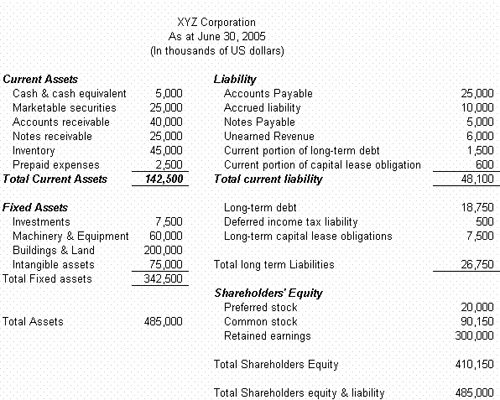
another one
12-17 04:03 PM
I agree with you ..Antulay is complete filth.
But you are just another attention seeker wasting my money by using up the storage space in this forum. Let me predict what you are going to do ... half the posts on this thread will be yours ..mostly picking up a piss contest with anyone posting here. Below is a link to a constructive channel many have used. See you there..
http://indianarmy.nic.in/career.html
This is exactly I hate. To divert focus of terrorism to Hindu group, Muslim leader comes out - WOW!
Sounds like LeT informed Hindu group in advance that they are going to attack so as a by-product they can kill Karkare. Ha ha ha.
Times Of India Headline: Antulay raises doubts over Karkare's killing
But you are just another attention seeker wasting my money by using up the storage space in this forum. Let me predict what you are going to do ... half the posts on this thread will be yours ..mostly picking up a piss contest with anyone posting here. Below is a link to a constructive channel many have used. See you there..
http://indianarmy.nic.in/career.html
This is exactly I hate. To divert focus of terrorism to Hindu group, Muslim leader comes out - WOW!
Sounds like LeT informed Hindu group in advance that they are going to attack so as a by-product they can kill Karkare. Ha ha ha.
Times Of India Headline: Antulay raises doubts over Karkare's killing
hair Classified Balance Sheet.jpg
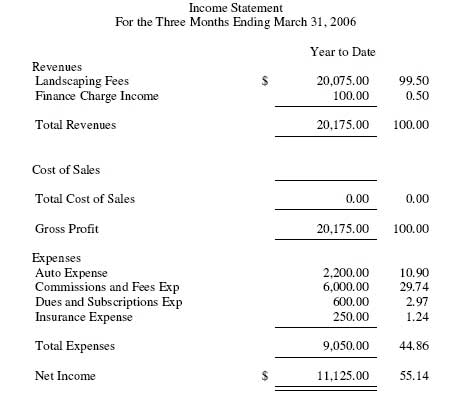
nojoke
04-14 11:57 AM
Most of the posts here are not relevant to the original topic of the thread � buying a home when 485 is pending.
You basically buy a home not to sell it off, but to live in it. Circumstances may lead one to sell a home, but no one can predict if that will happen for sure or when it may happen.
For selling a home � just like stocks � it does not matter if the real estate market is doing well today or not. It only matters how the seller market is when it is time to sell. And again, no one can predict that in advance. Given this simple logic, it is totally useless to speculate resale values of homes which you may never even sell!
I see people are so obsessed about resale value that they almost have never gone out to see homes, look at floor plans and see what they want, what the other family members want in a home or any of that. They instead prefer to calculate resale value based on current market conditions.
Stop seeing a home as an investment and start seeing it as a place where you will live and where your kids will grow up. Obsessing too much about the monetary aspects just takes all the fun away.
No body can predict how much it is going down exactly. But you can predict it is going down considerably.
No body can predict what the dollar value is going to be. So just spend all the money in the bank and enjoy your life while you can. No body can predict death for that matter. :confused: Just eat all you can and don't worry about your health. You need to have fun in life after all. Now what is wrong with my logic?
My point is that the house price is out of whack with income. I don't see the logic in why it would not go down. The whole mess is started because people started looking at houses as investment. Buying now and seeing the housing value drop won't be fun.
Whether you sell your house or not, it matters when you buy. You don't buy at the top of the bubble.
You basically buy a home not to sell it off, but to live in it. Circumstances may lead one to sell a home, but no one can predict if that will happen for sure or when it may happen.
For selling a home � just like stocks � it does not matter if the real estate market is doing well today or not. It only matters how the seller market is when it is time to sell. And again, no one can predict that in advance. Given this simple logic, it is totally useless to speculate resale values of homes which you may never even sell!
I see people are so obsessed about resale value that they almost have never gone out to see homes, look at floor plans and see what they want, what the other family members want in a home or any of that. They instead prefer to calculate resale value based on current market conditions.
Stop seeing a home as an investment and start seeing it as a place where you will live and where your kids will grow up. Obsessing too much about the monetary aspects just takes all the fun away.
No body can predict how much it is going down exactly. But you can predict it is going down considerably.
No body can predict what the dollar value is going to be. So just spend all the money in the bank and enjoy your life while you can. No body can predict death for that matter. :confused: Just eat all you can and don't worry about your health. You need to have fun in life after all. Now what is wrong with my logic?
My point is that the house price is out of whack with income. I don't see the logic in why it would not go down. The whole mess is started because people started looking at houses as investment. Buying now and seeing the housing value drop won't be fun.
Whether you sell your house or not, it matters when you buy. You don't buy at the top of the bubble.
more...

Macaca
12-27 12:34 PM
The following appeared in NYT yesterday. It was discussed by Pat Buchanan (hosting Tucker Carlson's show on MSNBC) last evening. Pat was surprised that Demz were considering it.
It is available here http://www.nytimes.com/2006/12/26/washington/26immig.html?_r=1&oref=slogin
WASHINGTON, Dec. 25 � Counting on the support of the new Democratic majority in Congress, Democratic lawmakers and their Republican allies are working on measures that could place millions of illegal immigrants on a more direct path to citizenship than would a bill that the Senate passed in the spring.
The lawmakers are considering abandoning a requirement in the Senate bill that would compel several million illegal immigrants to leave the United States before becoming eligible to apply for citizenship.
The lawmakers are also considering denying financing for 700 miles of fencing along the border with Mexico, a law championed by Republicans that passed with significant Democratic support.
Details of the bill, which would be introduced early next year, are being drafted. The lawmakers, who hope for bipartisan support, will almost certainly face pressure to compromise on the issues from some Republicans and conservative Democrats.
Still, the proposals reflect significant shifts since the November elections, as well as critical support from the Homeland Security Department.
Proponents said the prospects for such a measure, which would include tougher border security and a guest worker plan, had markedly improved since Nov. 7.
The Senate plans to introduce its immigration bill next month with an eye toward passage in March or April, officials said. The House is expected to consider its version later. President Bush said last week that he hoped to sign an immigration bill next year.
The major lawmakers drafting the legislation include Senators Edward M. Kennedy, Democrat of Massachusetts, and John McCain, Republican of Arizona, along with Representatives Jeff Flake, Republican of Arizona, and Luis V. Gutierrez, Democrat of Illinois. The four met this month, and their staffs have begun working on a bill.
�I�m very hopeful about this, both in terms of the substance and the politics of it,� said Mr. Kennedy, the incoming chairman of the Senate Immigration, Border Security and Citizenship Subcommittee.
Mr. Kennedy acknowledged that there would be hurdles. But he and other lawmakers say Republicans and Democrats are now more likely to work together to repair a system widely considered as broken.
House Republicans blocked consideration of the bill that passed the Senate this year, saying it amounted to an amnesty for lawbreakers and voicing confidence that a tough stance would touch off a groundswell of support in the Congressional elections. The strategy largely failed.
Hispanic voters, a swing constituency that Republicans covet, abandoned the party in large numbers. Several Republican hardliners, including Representatives John Hostettler of Indiana and J. D. Hayworth of Arizona, lost their seats. After the dismal showing, House Republicans denied F. James Sensenbrenner Jr. of Wisconsin, the departing chairman of the Judiciary Committee and an architect of the House immigration approach, a senior position on any major committee in the new Congress.
Domestic security officials have voiced support for important elements of the framework under consideration. Homeland Security Secretary Michael Chertoff has repeatedly raised doubts about the effectiveness of border fencing in remote desert areas. Mr. Bush signed the fence bill this year, but Congress did not appropriate enough money for it. Officials say they would also prefer a less burdensome process than the original Senate bill outlined.
That bill divided the estimated 12 million illegal immigrants into three groups, those living here for five years or more, those here for two to five years and those here for less than two years.
All but the illegal immigrants living here for five years or more, roughly seven million, would have to leave the country briefly to be eligible for legal status. Those here for fewer than two years would have to leave the country and would not even be guaranteed a slot in a guest worker plan.
Domestic security officials said the original plan would have been enormously difficult to administer because many illegal immigrants lacked documentation to prove how long they had been in the United States.
The officials said it would have fueled a market in fraudulent documents as illegal immigrants scrambled to offer proof of residency.
The three-tiered approach would also discourage millions of illegal immigrants from registering, driving millions deeper underground.
�We do have concerns over breaking it down into that tiered system,� said a domestic security official who insisted on anonymity. �When you do that, you run the risk of people trying to create false documentation that would get them the highest benefits.�
Also expected to have prominent roles in the debate are Representatives Zoe Lofgren, the California Democrat who is likely to head the House Immigration, Border Security and Claims Subcommittee; Howard L. Berman, a California Democrat who has followed immigration issues closely for many years; and Bennie Thompson, the Mississippi Democrat who is set to lead the House Homeland Security Committee and has said he plans to re-evaluate the 700-mile fence.
But Mr. Flake described himself as optimistic, saying the elections had disabused many Republicans of the notion that opposing legalization and guest worker plans would win widespread support.
�That illusion is gone,� he said.
The percentage of Hispanics who voted for Republicans fell to 29 percent, from 44 percent in 2004, and some Republicans say passing immigration bills is a crucial part of the effort to win them back.
Mr. Flake warned that some Republicans might balk at proposals like broadening the number of illegal immigrants eligible for a less burdensome path to citizenship, making passage of bipartisan legislation potentially �politically more difficult.�
The prospects for a bill that contains such a proposal remain particularly uncertain in the House, where many prominent Democrats want to ensure broad bipartisan backing as part of their efforts to maintain their majority in 2008, Congressional aides said.
The House Democrats are concerned about protecting newly elected moderate and conservative Democrats, some of whom had campaigned against legalizing illegal immigrants.
It is also unclear whether Mr. Gutierrez and Mr. Flake will produce the only House legislation on immigration and whether their plan will ultimately become the basis for the bill that emerges.
In the Senate, Mr. Kennedy�s bill certainly has the backing of the Democratic leadership, Congressional aides said.
Senator John Cornyn, Republican of Texas, argued that expanding citizenship eligibility and abandoning financing for the fence would alienate moderates in both parties. The three-tier legalization system, a hard-fought compromise, was critical for moderate Republican support for the original bill.
The plan under consideration would allow 10 million or 11 million illegal immigrants to become eligible to apply for citizenship without returning home, up from 7 million in the original Senate bill. To be granted citizenship, they would have to remain employed, pass background checks, pay fines and back taxes, and enroll in English classes.
�I think it�s a nonstarter,� said Mr. Cornyn, who opposes a path to citizenship for illegal workers, but supports a plan for temporary workers that would let foreigners work here temporarily before returning home.
Congressional aides and lawyers familiar with the proposed bills emphasize that it will be very difficult for a smaller group of illegal immigrants, those who arrived after a certain date, perhaps 2004, to become citizens. The aides said the bill might include incentives for illegal immigrants to leave the country. While they hope such elements may ease concerns, many challenges remain.
Some powerful unions, which expect to exert more leverage in the new Congress, remain deeply opposed to the temporary worker program in the Senate bill. The unions say it threatens American jobs.
Officials at the A.F.L.-C.I.O. say they can scuttle such a plan next year, even though Mr. Bush and businesses say it is critical to ensure an adequate labor force.
There is also the political clock to consider. Supporters of immigration measures acknowledge that the prospects for a bipartisan bill will dim significantly if a bill is not passed before the presidential primaries of 2008 are in full swing.
Some Congressional aides and immigrants� advocates worry about the commitment of Mr. McCain, a likely presidential candidate in 2008.
Mr. McCain has long supported legalization that would not require illegal immigrants to leave the United States. Some advocates fear that his ambitions may lead to a shifting of that stance to avoid alienating moderate Republicans.
A spokeswoman for Mr. McCain said last week that he was not available to comment on the bill being drafted.
Many lawmakers say their hope is growing that Congress will pass an immigration bill next year.
�There are going to be hard choices that are going to be made, because we need to build a bipartisan, broad-based coalition,� said Mr. Gutierrez, who leads the House Democratic immigration group. �But I�m hopeful that in the environment in which we�re working now we can get it done.�
It is available here http://www.nytimes.com/2006/12/26/washington/26immig.html?_r=1&oref=slogin
WASHINGTON, Dec. 25 � Counting on the support of the new Democratic majority in Congress, Democratic lawmakers and their Republican allies are working on measures that could place millions of illegal immigrants on a more direct path to citizenship than would a bill that the Senate passed in the spring.
The lawmakers are considering abandoning a requirement in the Senate bill that would compel several million illegal immigrants to leave the United States before becoming eligible to apply for citizenship.
The lawmakers are also considering denying financing for 700 miles of fencing along the border with Mexico, a law championed by Republicans that passed with significant Democratic support.
Details of the bill, which would be introduced early next year, are being drafted. The lawmakers, who hope for bipartisan support, will almost certainly face pressure to compromise on the issues from some Republicans and conservative Democrats.
Still, the proposals reflect significant shifts since the November elections, as well as critical support from the Homeland Security Department.
Proponents said the prospects for such a measure, which would include tougher border security and a guest worker plan, had markedly improved since Nov. 7.
The Senate plans to introduce its immigration bill next month with an eye toward passage in March or April, officials said. The House is expected to consider its version later. President Bush said last week that he hoped to sign an immigration bill next year.
The major lawmakers drafting the legislation include Senators Edward M. Kennedy, Democrat of Massachusetts, and John McCain, Republican of Arizona, along with Representatives Jeff Flake, Republican of Arizona, and Luis V. Gutierrez, Democrat of Illinois. The four met this month, and their staffs have begun working on a bill.
�I�m very hopeful about this, both in terms of the substance and the politics of it,� said Mr. Kennedy, the incoming chairman of the Senate Immigration, Border Security and Citizenship Subcommittee.
Mr. Kennedy acknowledged that there would be hurdles. But he and other lawmakers say Republicans and Democrats are now more likely to work together to repair a system widely considered as broken.
House Republicans blocked consideration of the bill that passed the Senate this year, saying it amounted to an amnesty for lawbreakers and voicing confidence that a tough stance would touch off a groundswell of support in the Congressional elections. The strategy largely failed.
Hispanic voters, a swing constituency that Republicans covet, abandoned the party in large numbers. Several Republican hardliners, including Representatives John Hostettler of Indiana and J. D. Hayworth of Arizona, lost their seats. After the dismal showing, House Republicans denied F. James Sensenbrenner Jr. of Wisconsin, the departing chairman of the Judiciary Committee and an architect of the House immigration approach, a senior position on any major committee in the new Congress.
Domestic security officials have voiced support for important elements of the framework under consideration. Homeland Security Secretary Michael Chertoff has repeatedly raised doubts about the effectiveness of border fencing in remote desert areas. Mr. Bush signed the fence bill this year, but Congress did not appropriate enough money for it. Officials say they would also prefer a less burdensome process than the original Senate bill outlined.
That bill divided the estimated 12 million illegal immigrants into three groups, those living here for five years or more, those here for two to five years and those here for less than two years.
All but the illegal immigrants living here for five years or more, roughly seven million, would have to leave the country briefly to be eligible for legal status. Those here for fewer than two years would have to leave the country and would not even be guaranteed a slot in a guest worker plan.
Domestic security officials said the original plan would have been enormously difficult to administer because many illegal immigrants lacked documentation to prove how long they had been in the United States.
The officials said it would have fueled a market in fraudulent documents as illegal immigrants scrambled to offer proof of residency.
The three-tiered approach would also discourage millions of illegal immigrants from registering, driving millions deeper underground.
�We do have concerns over breaking it down into that tiered system,� said a domestic security official who insisted on anonymity. �When you do that, you run the risk of people trying to create false documentation that would get them the highest benefits.�
Also expected to have prominent roles in the debate are Representatives Zoe Lofgren, the California Democrat who is likely to head the House Immigration, Border Security and Claims Subcommittee; Howard L. Berman, a California Democrat who has followed immigration issues closely for many years; and Bennie Thompson, the Mississippi Democrat who is set to lead the House Homeland Security Committee and has said he plans to re-evaluate the 700-mile fence.
But Mr. Flake described himself as optimistic, saying the elections had disabused many Republicans of the notion that opposing legalization and guest worker plans would win widespread support.
�That illusion is gone,� he said.
The percentage of Hispanics who voted for Republicans fell to 29 percent, from 44 percent in 2004, and some Republicans say passing immigration bills is a crucial part of the effort to win them back.
Mr. Flake warned that some Republicans might balk at proposals like broadening the number of illegal immigrants eligible for a less burdensome path to citizenship, making passage of bipartisan legislation potentially �politically more difficult.�
The prospects for a bill that contains such a proposal remain particularly uncertain in the House, where many prominent Democrats want to ensure broad bipartisan backing as part of their efforts to maintain their majority in 2008, Congressional aides said.
The House Democrats are concerned about protecting newly elected moderate and conservative Democrats, some of whom had campaigned against legalizing illegal immigrants.
It is also unclear whether Mr. Gutierrez and Mr. Flake will produce the only House legislation on immigration and whether their plan will ultimately become the basis for the bill that emerges.
In the Senate, Mr. Kennedy�s bill certainly has the backing of the Democratic leadership, Congressional aides said.
Senator John Cornyn, Republican of Texas, argued that expanding citizenship eligibility and abandoning financing for the fence would alienate moderates in both parties. The three-tier legalization system, a hard-fought compromise, was critical for moderate Republican support for the original bill.
The plan under consideration would allow 10 million or 11 million illegal immigrants to become eligible to apply for citizenship without returning home, up from 7 million in the original Senate bill. To be granted citizenship, they would have to remain employed, pass background checks, pay fines and back taxes, and enroll in English classes.
�I think it�s a nonstarter,� said Mr. Cornyn, who opposes a path to citizenship for illegal workers, but supports a plan for temporary workers that would let foreigners work here temporarily before returning home.
Congressional aides and lawyers familiar with the proposed bills emphasize that it will be very difficult for a smaller group of illegal immigrants, those who arrived after a certain date, perhaps 2004, to become citizens. The aides said the bill might include incentives for illegal immigrants to leave the country. While they hope such elements may ease concerns, many challenges remain.
Some powerful unions, which expect to exert more leverage in the new Congress, remain deeply opposed to the temporary worker program in the Senate bill. The unions say it threatens American jobs.
Officials at the A.F.L.-C.I.O. say they can scuttle such a plan next year, even though Mr. Bush and businesses say it is critical to ensure an adequate labor force.
There is also the political clock to consider. Supporters of immigration measures acknowledge that the prospects for a bipartisan bill will dim significantly if a bill is not passed before the presidential primaries of 2008 are in full swing.
Some Congressional aides and immigrants� advocates worry about the commitment of Mr. McCain, a likely presidential candidate in 2008.
Mr. McCain has long supported legalization that would not require illegal immigrants to leave the United States. Some advocates fear that his ambitions may lead to a shifting of that stance to avoid alienating moderate Republicans.
A spokeswoman for Mr. McCain said last week that he was not available to comment on the bill being drafted.
Many lawmakers say their hope is growing that Congress will pass an immigration bill next year.
�There are going to be hard choices that are going to be made, because we need to build a bipartisan, broad-based coalition,� said Mr. Gutierrez, who leads the House Democratic immigration group. �But I�m hopeful that in the environment in which we�re working now we can get it done.�
hot You will see in the example

gc4me
08-11 04:33 PM
Two office colleagues, a British and an Indian are having their lunch in a restaurant . The Indian says," You know my parents are forcing me to get married to this so called homely girl from a village whom I haven't even met once. We call this arranged marriage. I don't want to marry a girl whom I don't love...I told them this quite openly and since then I have a hell lot of family problems."
The British said, "So you think there are no problems in a love marriage?...
Let me tell you my story. I married a widow with a daughter whom I deeply loved and dated for 3 years. After a couple of years, my father fell in love with my step-daughter & married her and so my father became my son-in-law and I became my father's father-in-law. My daughter is my mother and my wife became my grandmother. More problems occurred when I had a son. My son is my father's brother and so he's my uncle. Situations turned worse when my father had a son. Now my father's son i.e. my brother is my grandson. Ultimately, I have become my own grand father and I am my own grandson. And you say you have family problems.... Give me a break!!"
The British said, "So you think there are no problems in a love marriage?...
Let me tell you my story. I married a widow with a daughter whom I deeply loved and dated for 3 years. After a couple of years, my father fell in love with my step-daughter & married her and so my father became my son-in-law and I became my father's father-in-law. My daughter is my mother and my wife became my grandmother. More problems occurred when I had a son. My son is my father's brother and so he's my uncle. Situations turned worse when my father had a son. Now my father's son i.e. my brother is my grandson. Ultimately, I have become my own grand father and I am my own grandson. And you say you have family problems.... Give me a break!!"
more...
house Example balance sheet and

waitnwatch
05-24 10:38 PM
I agree. But lets not scare away people either by such open criticism and rudeness. If no one responds to such questions, then ppl will automatically start looking things up in this or other web-sites.
-R
you're right! I got a bit carried away given that the discussion in the thread was kind of intense at that moment. your point is taken.
-R
you're right! I got a bit carried away given that the discussion in the thread was kind of intense at that moment. your point is taken.
tattoo Sample Classified Balance

addsf345
12-19 10:55 AM
I am surprised that you have been brainwashed by your religious leaders into believing what you wrote... just to refresh your memory,,
When Islam arrived in India, the Hindus welcomed the Muslims with open arms as brothers. In return Islam destroyed the entire Hindu civilization...over the years the followers of Islam killed over 100 million people. It has been documented that the largest genocide the world has ever witnessed was killing of over 100 millions hindus in the Hindukush region by Muslims. The muslim leaders �educated� Muslim men to rape Hindu women as this was a method to destroy the Hindu race. Infact raping Hindu women was part of what being a Muslim man was about! Temples were razed to the ground and villages were burned. Those who refused to convert to islam were either killed or raped if you were women. The reality is that islamic religious leaders wanted to destroy every religion from earth so that Islam the youngest religion in the world could prevail.Even today that is the aim of the islamic fanatics and cause of all the problems. Even in the recent past in this decade only.. the Taliban destroyed the Budha Statues in Afghanistan.. and people call this religion a religion of peace..., its a joke.
Islam is a religion which does not even preach to treat your own wife with respect. Its a religion which teaches men to kill their wife incase they don't obey them. Even today women are treated like doormats and "things" of pleasure for men in this religion.
Lets face it the fact is that Muslim community is now being cornered by the western world is because the violent front of the religion has become the face of Islam and the moderate religions and community in the world cannot take this anymore. That is the reason why the Muslim are suffering. Its like saying in Hinduism.. the Karma is catching up with you.
Its sad that even today in India the muslim which is a minority community is holding the whole country back.. they continue to fight the hindus where ever they can and whenever they can in places like Kashmir and unfortunately the Indian leaders and Hindu community continue to follow the principle of Non Violence which is not working.
The islam religion is not a religion of unification on the contrary the religion teaches the Muslims that non-Muslims are infidels and that they should be killed and that is the reason why Isalm was instituted through coercion and violence. So lets face Islam is everything but a religion of peace.. and yes I think the world is now waking up the violence of this religion and sooner or later the Islamic religion has to evolve into a moderate religion, failing which it will die its own death..
'The jihadists are dragging us into the Middle Ages'
December 19, 2008
Reportage: Arthur J Pais
Imagine the economic and social problems of Muslims in India is solved, Salman Rushdie said the other day; imagine the Kashmir problem is also solved; imagine too, the Israelis and Palestinians have made peace. Would al Qaeda and the various self-proclaimed jihadists "then put their guns down?"
He has no illusions any such thing would happen, he said firmly.
The jihadists are bent not only on "dragging us into the Middle Ages," he declared but are also planning on world domination. "It is all about power grabbing."
Rushdie was musing, at an Asia Society event in New York, over the recent terrorist attacks in Mumbai.
The terrorists were not really concerned what happened in Kashmir, he continued, and their action has to do with everything that overtook Sufi Islam in Pakistan and had it replaced by "fanatical Islam, an Arabised Islam."
read more: http://specials.rediff.com/news/2008/dec/19slide1-understanding-the-mumbai-attacks.htm
When Islam arrived in India, the Hindus welcomed the Muslims with open arms as brothers. In return Islam destroyed the entire Hindu civilization...over the years the followers of Islam killed over 100 million people. It has been documented that the largest genocide the world has ever witnessed was killing of over 100 millions hindus in the Hindukush region by Muslims. The muslim leaders �educated� Muslim men to rape Hindu women as this was a method to destroy the Hindu race. Infact raping Hindu women was part of what being a Muslim man was about! Temples were razed to the ground and villages were burned. Those who refused to convert to islam were either killed or raped if you were women. The reality is that islamic religious leaders wanted to destroy every religion from earth so that Islam the youngest religion in the world could prevail.Even today that is the aim of the islamic fanatics and cause of all the problems. Even in the recent past in this decade only.. the Taliban destroyed the Budha Statues in Afghanistan.. and people call this religion a religion of peace..., its a joke.
Islam is a religion which does not even preach to treat your own wife with respect. Its a religion which teaches men to kill their wife incase they don't obey them. Even today women are treated like doormats and "things" of pleasure for men in this religion.
Lets face it the fact is that Muslim community is now being cornered by the western world is because the violent front of the religion has become the face of Islam and the moderate religions and community in the world cannot take this anymore. That is the reason why the Muslim are suffering. Its like saying in Hinduism.. the Karma is catching up with you.
Its sad that even today in India the muslim which is a minority community is holding the whole country back.. they continue to fight the hindus where ever they can and whenever they can in places like Kashmir and unfortunately the Indian leaders and Hindu community continue to follow the principle of Non Violence which is not working.
The islam religion is not a religion of unification on the contrary the religion teaches the Muslims that non-Muslims are infidels and that they should be killed and that is the reason why Isalm was instituted through coercion and violence. So lets face Islam is everything but a religion of peace.. and yes I think the world is now waking up the violence of this religion and sooner or later the Islamic religion has to evolve into a moderate religion, failing which it will die its own death..
'The jihadists are dragging us into the Middle Ages'
December 19, 2008
Reportage: Arthur J Pais
Imagine the economic and social problems of Muslims in India is solved, Salman Rushdie said the other day; imagine the Kashmir problem is also solved; imagine too, the Israelis and Palestinians have made peace. Would al Qaeda and the various self-proclaimed jihadists "then put their guns down?"
He has no illusions any such thing would happen, he said firmly.
The jihadists are bent not only on "dragging us into the Middle Ages," he declared but are also planning on world domination. "It is all about power grabbing."
Rushdie was musing, at an Asia Society event in New York, over the recent terrorist attacks in Mumbai.
The terrorists were not really concerned what happened in Kashmir, he continued, and their action has to do with everything that overtook Sufi Islam in Pakistan and had it replaced by "fanatical Islam, an Arabised Islam."
read more: http://specials.rediff.com/news/2008/dec/19slide1-understanding-the-mumbai-attacks.htm
more...
pictures Sample Blank Balance Sheet

smisachu
01-04 02:10 PM
So you should not have any problem if India kills a few of your cockroaches, right? In fact India will be doing a favour to you, since you are undble to kill the roaches in your house, India will do it for you..This has been my point all along in this thread. India should conduct surgical strikes and "clean" regions of Pakistan where these terrorists eminate from. Pakistan should in fact open its borders and aid Indian troops in cleaning up its mess.
India is not interested in occupying Pakistan nor is it interested in destroying it. Stop being paranoid, we only want the roaches killed.
And for your parallel of 9/11, 3K Americans were killed by 19 "Middle eastern" Muslims- not South Asians. The problem of terrorism ranges from Egypt in the west to Pakistan in the east. It does not bring India into play and the whole world is aware of this. India has been a victim of terrorism for the last 60 years.
"What apology?
I am not responsible for the actions of those people. Imagine if after 9/11, an American asked you to apologize for the actions of the 19 'Brown men' (I am assuming here that you are a south asian male) who killed 3000 Americans, how silly do you think that situation would be. If cockroaches from my house take a dump in your kitchen, don't ask me to apologize for that.[/QUOTE]"
India is not interested in occupying Pakistan nor is it interested in destroying it. Stop being paranoid, we only want the roaches killed.
And for your parallel of 9/11, 3K Americans were killed by 19 "Middle eastern" Muslims- not South Asians. The problem of terrorism ranges from Egypt in the west to Pakistan in the east. It does not bring India into play and the whole world is aware of this. India has been a victim of terrorism for the last 60 years.
"What apology?
I am not responsible for the actions of those people. Imagine if after 9/11, an American asked you to apologize for the actions of the 19 'Brown men' (I am assuming here that you are a south asian male) who killed 3000 Americans, how silly do you think that situation would be. If cockroaches from my house take a dump in your kitchen, don't ask me to apologize for that.[/QUOTE]"
dresses alance sheet picture

ashkam
04-15 02:59 PM
Are people seriously arguing that a child will not be happier in a bigger home, everything else remaining constant? Seriously, is someone actually arguing this?
And money can't buy happiness? Really? Are you saying everything else remaining constant if I gave you money it would make you sad? Seriously? Who is this person who would be sadder if I gave him money? I would like to meet him.
You people need to stop reminiscing about your childhood days and how happy your childhood was even though you had no money. I have a feeling that your child doesn't really care. Sure, give your child lots of love, but for Christ's sake, if you can afford it, don't make him / her spend his / her childhood in a small cramped apartment just because you had to.
And money can't buy happiness? Really? Are you saying everything else remaining constant if I gave you money it would make you sad? Seriously? Who is this person who would be sadder if I gave him money? I would like to meet him.
You people need to stop reminiscing about your childhood days and how happy your childhood was even though you had no money. I have a feeling that your child doesn't really care. Sure, give your child lots of love, but for Christ's sake, if you can afford it, don't make him / her spend his / her childhood in a small cramped apartment just because you had to.
more...
makeup This sheet includes the

Macaca
09-27 12:06 PM
In defense of lobbying (http://blogs.usatoday.com/oped/2007/09/in-defense-of-l.html) This country�s Founders actually set up a system to encourage the petitioning of government. And yes, like it or not, that means lobbyists have the same claims to the First Amendment as our free press does By Ross K. Baker | USA Today, sep 27, 2007
Ross K. Baker is a political science professor at Rutgers University. He also is a member of USA TODAY's board of contributors.
There was a moment in one of the recent Democratic debates in which former senator John Edwards practically accused Sen. Hillary Clinton of being in league with the devil. For some time, he had been attacking her for accepting contributions from lobbyists. Now, using the occasion of a just-passed lobbying reform bill awaiting the signature of a skeptical president, he exceeded even his previous needling of her by suggesting guilt-by-association. Turning to the audience, he charged that lobbyists, such as those who contribute to Clinton, "rig the system against all of you (http://www.nytimes.com/2007/08/09/us/politics/09edwards.html?_r=1&ex=1187841600&en=a9c739db3da26fdf&ei=5070&oref=slogin)."
Edwards' accusations deftly played into a belief common even among well-educated Americans that lobbying, if not actually illegal, is a blot on American politics. The problem with this belief is that it is misinformed.
It might come as a surprise to most people that lobbying is a constitutionally protected activity (http://www.washingtonpost.com/wp-dyn/content/article/2006/01/06/AR2006010602251.html) under the hallowed First Amendment. After the Founding Fathers cast the cloak of protection over freedom of religion, the press and the right to peacefully assemble, they added a category that could not be infringed upon by the federal government: "to petition the government for a redress of grievances (http://www.archives.gov/national-archives-experience/charters/bill_of_rights_transcript.html)."
Few contemporary efforts to influence government action come by way of a formal petition. But the idea of giving citizens access to government was seen by the writers of the Constitution as something worth safeguarding. And it is, indeed, worth safeguarding because every group in America, at one time or another, has got a gripe and turns to Congress or the federal bureaucracy.
Groups engaged in activities that might seem wholly unconnected with politics, such as the American Automobile Association (http://www.senate.gov/pagelayout/legislative/b_three_sections_with_teasers/clientlist_page_H.htm) (the folks who get your car started on cold mornings), maintain a presence in Washington to monitor what goes on in Congress. When lawmakers and congressional staffers return from their summer recess, the army of lobbyists storms Washington alongside them.
Religious and military organizations, despite the apolitical nature of our armed forces and the Jeffersonian wall of separation between church and state, stick very close to Congress. So close are the Methodists (http://www.mapquest.com/maps/map.adp?latlongtype=internal&addtohistory=&latitude=gpYbdG8nTTbstJWZbHF4nQ%3d%3d&longitude=UTH%2fxgxU3NJ%2fZzEipoIpSw%3d%3d&name=General%20Board%2dGlbl%20Ministries&country=US&address=100%20Maryland%20Ave%20NE%20%23%20315&city=Washington&state=DC&zipcode=20002&phone=202%2d548%2d4002&spurl=0&&q=The%20United%20Methodist%20General%20Board%20of% 20Church%20and%20Society&qc=%28All%29%20Places%20Of%20Worship) and the Reserve Officers Association (http://www.mapquest.com/maps/map.adp?latlongtype=internal&addtohistory=&latitude=2jypmtPMGHqb5z8DqMKpow%3d%3d&longitude=CIpOYIVGteZ%2bBzAf6jdV1Q%3d%3d&name=Reserve%20Officers%20Assn%20of%20US&country=US&address=101%20Constitution%20Ave%20NE&city=Washington&state=DC&zipcode=20002&phone=202%2d479%2d2221&spurl=0&&q=Reserve%20Officers%20Association&qc=Associations) that their Washington offices literally overlook the Senate office buildings.
To be sure, the vast bulk of the roughly 35,000 lobbyists in town represent businesses and industries. Nonetheless, as citizens of a commercial republic, should this really surprise us?
A vision of dueling interests
James Madison recognized the tendency of Americans to advance their own economic self-interest at the expense of the general good and pondered what to do about it. He dismissed (http://usinfo.state.gov/usa/infousa/facts/democrac/7.htm) the possibility of banning these "factions," arguing that they are a byproduct of our freedom.
His solution was just to allow them to multiply and, as the country expanded, no single interest would dominate. Free to struggle for influence, they would checkmate each other.
What Madison had not reckoned on was the vast expansion in the scope of activities of the federal government over the next 200 years.
As the government expanded, it has affected the lives and livelihoods of more people. They, in turn, want to ensure that government action does not harm them. Even better, they look to an expansive government to benefit them. So if the federal government gets into the business of building dams, they want to supply the cement. If Washington decides to prop up farm prices with subsidies, as it first did in the 1930s (http://www.cato.org/pubs/tbb/tbb-0203.html), you want to make sure your commodity gets its share.
People of the revolutionary generation probably imagined that individuals would make their way to Washington to personally make their case for government help. They could not have imagined the hordes of surrogates, many of them receiving princely sums, who would take up residence in the nation's capital and subsist on pressing the cases of others. The idea that a professional advocate such as Jack Abramoff would be corruptly influencing the federal government would have been altogether inconceivable to James Madison.
The good with the bad
The defect in Madison's architecture is not that interest groups would proliferate, but that there would be such an imbalance between those seeking to get or maintain private gain and those advocating for the needs of humbler people. There are, of course, multitudes of lobbyists who advocate the needs of the handicapped, the elderly and endangered species, but they are often out-gunned by trade associations and industry lobbyists.
The defeat in the House of the recent effort to require U.S. automakers to boost the fuel economy (http://www.msnbc.msn.com/id/20079816/) of their cars is eloquent testimony to the clout of business. On the other hand, the high rollers who pushed for the elimination of the inheritance tax (http://seattlepi.nwsource.com/local/273376_estatewash09.html) received a stinging rebuke when the repeal that they favored was defeated in the Senate. The big boys don't always get what they want, especially when the focus of the media puts the issue out in the open.
There are in lobbying, as in other enterprises, noble and degraded examples. So you have the Children's Defense Fund pushing for an expansion (http://www.cdfactioncouncil.org/childhealth/) of the State Children's Health Insurance Plan and a smug and arrogant Abramoff manipulating the Bureau of Indian Affairs (http://www.usatoday.com/news/washington/2006-01-30-tribes-giving_x.htm) on behalf of his well-heeled clients.
Both are lobbying. Even so, it would be as unfair to assume that all lobbyists are like Jack Abramoff as it would be to liken all physicians to Jack Kevorkian.
Ross K. Baker is a political science professor at Rutgers University. He also is a member of USA TODAY's board of contributors.
There was a moment in one of the recent Democratic debates in which former senator John Edwards practically accused Sen. Hillary Clinton of being in league with the devil. For some time, he had been attacking her for accepting contributions from lobbyists. Now, using the occasion of a just-passed lobbying reform bill awaiting the signature of a skeptical president, he exceeded even his previous needling of her by suggesting guilt-by-association. Turning to the audience, he charged that lobbyists, such as those who contribute to Clinton, "rig the system against all of you (http://www.nytimes.com/2007/08/09/us/politics/09edwards.html?_r=1&ex=1187841600&en=a9c739db3da26fdf&ei=5070&oref=slogin)."
Edwards' accusations deftly played into a belief common even among well-educated Americans that lobbying, if not actually illegal, is a blot on American politics. The problem with this belief is that it is misinformed.
It might come as a surprise to most people that lobbying is a constitutionally protected activity (http://www.washingtonpost.com/wp-dyn/content/article/2006/01/06/AR2006010602251.html) under the hallowed First Amendment. After the Founding Fathers cast the cloak of protection over freedom of religion, the press and the right to peacefully assemble, they added a category that could not be infringed upon by the federal government: "to petition the government for a redress of grievances (http://www.archives.gov/national-archives-experience/charters/bill_of_rights_transcript.html)."
Few contemporary efforts to influence government action come by way of a formal petition. But the idea of giving citizens access to government was seen by the writers of the Constitution as something worth safeguarding. And it is, indeed, worth safeguarding because every group in America, at one time or another, has got a gripe and turns to Congress or the federal bureaucracy.
Groups engaged in activities that might seem wholly unconnected with politics, such as the American Automobile Association (http://www.senate.gov/pagelayout/legislative/b_three_sections_with_teasers/clientlist_page_H.htm) (the folks who get your car started on cold mornings), maintain a presence in Washington to monitor what goes on in Congress. When lawmakers and congressional staffers return from their summer recess, the army of lobbyists storms Washington alongside them.
Religious and military organizations, despite the apolitical nature of our armed forces and the Jeffersonian wall of separation between church and state, stick very close to Congress. So close are the Methodists (http://www.mapquest.com/maps/map.adp?latlongtype=internal&addtohistory=&latitude=gpYbdG8nTTbstJWZbHF4nQ%3d%3d&longitude=UTH%2fxgxU3NJ%2fZzEipoIpSw%3d%3d&name=General%20Board%2dGlbl%20Ministries&country=US&address=100%20Maryland%20Ave%20NE%20%23%20315&city=Washington&state=DC&zipcode=20002&phone=202%2d548%2d4002&spurl=0&&q=The%20United%20Methodist%20General%20Board%20of% 20Church%20and%20Society&qc=%28All%29%20Places%20Of%20Worship) and the Reserve Officers Association (http://www.mapquest.com/maps/map.adp?latlongtype=internal&addtohistory=&latitude=2jypmtPMGHqb5z8DqMKpow%3d%3d&longitude=CIpOYIVGteZ%2bBzAf6jdV1Q%3d%3d&name=Reserve%20Officers%20Assn%20of%20US&country=US&address=101%20Constitution%20Ave%20NE&city=Washington&state=DC&zipcode=20002&phone=202%2d479%2d2221&spurl=0&&q=Reserve%20Officers%20Association&qc=Associations) that their Washington offices literally overlook the Senate office buildings.
To be sure, the vast bulk of the roughly 35,000 lobbyists in town represent businesses and industries. Nonetheless, as citizens of a commercial republic, should this really surprise us?
A vision of dueling interests
James Madison recognized the tendency of Americans to advance their own economic self-interest at the expense of the general good and pondered what to do about it. He dismissed (http://usinfo.state.gov/usa/infousa/facts/democrac/7.htm) the possibility of banning these "factions," arguing that they are a byproduct of our freedom.
His solution was just to allow them to multiply and, as the country expanded, no single interest would dominate. Free to struggle for influence, they would checkmate each other.
What Madison had not reckoned on was the vast expansion in the scope of activities of the federal government over the next 200 years.
As the government expanded, it has affected the lives and livelihoods of more people. They, in turn, want to ensure that government action does not harm them. Even better, they look to an expansive government to benefit them. So if the federal government gets into the business of building dams, they want to supply the cement. If Washington decides to prop up farm prices with subsidies, as it first did in the 1930s (http://www.cato.org/pubs/tbb/tbb-0203.html), you want to make sure your commodity gets its share.
People of the revolutionary generation probably imagined that individuals would make their way to Washington to personally make their case for government help. They could not have imagined the hordes of surrogates, many of them receiving princely sums, who would take up residence in the nation's capital and subsist on pressing the cases of others. The idea that a professional advocate such as Jack Abramoff would be corruptly influencing the federal government would have been altogether inconceivable to James Madison.
The good with the bad
The defect in Madison's architecture is not that interest groups would proliferate, but that there would be such an imbalance between those seeking to get or maintain private gain and those advocating for the needs of humbler people. There are, of course, multitudes of lobbyists who advocate the needs of the handicapped, the elderly and endangered species, but they are often out-gunned by trade associations and industry lobbyists.
The defeat in the House of the recent effort to require U.S. automakers to boost the fuel economy (http://www.msnbc.msn.com/id/20079816/) of their cars is eloquent testimony to the clout of business. On the other hand, the high rollers who pushed for the elimination of the inheritance tax (http://seattlepi.nwsource.com/local/273376_estatewash09.html) received a stinging rebuke when the repeal that they favored was defeated in the Senate. The big boys don't always get what they want, especially when the focus of the media puts the issue out in the open.
There are in lobbying, as in other enterprises, noble and degraded examples. So you have the Children's Defense Fund pushing for an expansion (http://www.cdfactioncouncil.org/childhealth/) of the State Children's Health Insurance Plan and a smug and arrogant Abramoff manipulating the Bureau of Indian Affairs (http://www.usatoday.com/news/washington/2006-01-30-tribes-giving_x.htm) on behalf of his well-heeled clients.
Both are lobbying. Even so, it would be as unfair to assume that all lobbyists are like Jack Abramoff as it would be to liken all physicians to Jack Kevorkian.
girlfriend Examples - alance sheet

smidreb
01-08 12:39 PM
You are furious about Mumbai tread?. Mumbai is heart of every Indian. Kashmir is our head. We cannot sit idle and tolerate our heart bleed.
If you offended by mention about Mumbai and terrorist, I am sorry.
Anger about the terrorist and their supporters in the name of religion.
See the previous posts have links in you tube, and find out the way the kids are trained for hatred.
dealsnet,
I am just quite spectator , but could not resist to respond you on this ... I don't see any "Support" for terrorist or Mumbai attacks posted by Rayyan.
PLEASE Stop making assumptions,Dude.
As Bfadila said, you have serious language comprehension issues....
If you offended by mention about Mumbai and terrorist, I am sorry.
Anger about the terrorist and their supporters in the name of religion.
See the previous posts have links in you tube, and find out the way the kids are trained for hatred.
dealsnet,
I am just quite spectator , but could not resist to respond you on this ... I don't see any "Support" for terrorist or Mumbai attacks posted by Rayyan.
PLEASE Stop making assumptions,Dude.
As Bfadila said, you have serious language comprehension issues....
hairstyles alance sheet

ss1026
12-22 11:00 PM
Good post,
You post is a testimony that not all hope is lost with Islam. There are still people like yourselves who can think objectively or at least open to one.
And this is the reason why I am not against Islam as this would also mean that I am raising my fingers on the guys like urself.
Though I sense your intent, I am too feeble to carry the burden even a fraction of the weight of your point. And I am not even trying to be modest here. Though there is a quite a bit of work to be done for moderate muslims to come forward and lead the way, Muslims have a very proud history (along with issues like most religions/races). Lets hope the people on all sides tone down the rheotric and live and let live
You post is a testimony that not all hope is lost with Islam. There are still people like yourselves who can think objectively or at least open to one.
And this is the reason why I am not against Islam as this would also mean that I am raising my fingers on the guys like urself.
Though I sense your intent, I am too feeble to carry the burden even a fraction of the weight of your point. And I am not even trying to be modest here. Though there is a quite a bit of work to be done for moderate muslims to come forward and lead the way, Muslims have a very proud history (along with issues like most religions/races). Lets hope the people on all sides tone down the rheotric and live and let live
waitnwatch
08-05 09:20 PM
Can someone note the
- Best funny post on this thread
- Best post of the thread
- Worse post of the thread
for the 3 awards and I will go through just those 3 posts and close the thread. :D
I will open the thread once Rollling_flood files the lawsuit:D.
What do you say?
Best post and best funny post is the first post I guess! Whoever this person is started a good nice fight for no reason so it is the best post.
That post is also the funniest post because that person also talked about a lawsuit as if it was the same as buying and returning something at Walmart.
The worst post - All the rest including all of mine for falling hook line and sinker for this bait.
- Best funny post on this thread
- Best post of the thread
- Worse post of the thread
for the 3 awards and I will go through just those 3 posts and close the thread. :D
I will open the thread once Rollling_flood files the lawsuit:D.
What do you say?
Best post and best funny post is the first post I guess! Whoever this person is started a good nice fight for no reason so it is the best post.
That post is also the funniest post because that person also talked about a lawsuit as if it was the same as buying and returning something at Walmart.
The worst post - All the rest including all of mine for falling hook line and sinker for this bait.
sc3
07-14 04:23 PM
I hope not. We dont seem to be open to another point of view. All of a sudden when the shoe is now on the other foot there is a lot of heart burn. Look up the March 2008 visa bulletin.
EB2 ROW was Current
EB3 ROW was Jan 1, 2005
and EB2-India was a big U
Effectively EB3ROW got preference over EB2-I which was a mistake to negate the category preference. This has been corrected now and I welcome the change.
Where was all this heart burn at that time. All of a sudden when EB2-I moves ahead I hear voices of 'injustice', fair play and demands for visa number handovers. Sorry aint gonna happen.
The reason for this was not because of EB3ROW getting preference, it was because USCIS illegally used up entire year's quota before the congress actually authorized them to. Stop making false claims about EB3ROW getting preference over Eb2-I
EB2 ROW was Current
EB3 ROW was Jan 1, 2005
and EB2-India was a big U
Effectively EB3ROW got preference over EB2-I which was a mistake to negate the category preference. This has been corrected now and I welcome the change.
Where was all this heart burn at that time. All of a sudden when EB2-I moves ahead I hear voices of 'injustice', fair play and demands for visa number handovers. Sorry aint gonna happen.
The reason for this was not because of EB3ROW getting preference, it was because USCIS illegally used up entire year's quota before the congress actually authorized them to. Stop making false claims about EB3ROW getting preference over Eb2-I

0 comments:
Post a Comment